


4 Swatch Tests That Predict Night Privacy for Sheer Curtains
Most sheer curtains lose their privacy value once the sun goes down and the lamps come on. The fabric that hides you from the street at noon turns into a glowing screen that outlines your silhouette after dark. The fix isn’t abandoning sheers. It’s pairing a denser privacy weave, or a second layer behind it, with the airy look you actually bought them for.
TL;DR:
Sheer curtains with open-weave fabrics offer little night privacy and require denser weaves or additional layers to block silhouettes effectively.
A double-track system with a sheer panel in front and a blackout or heavy drape behind provides the most reliable solution without sacrificing the sheer aesthetic during the day.
Testing curtain samples at home with your own lamps and lighting conditions prevents disappointment and ensures the chosen fabric will meet privacy needs at night.
Proper curtain installation, including mounting high and wide, significantly reduces sightlines and enhances nighttime privacy without altering the look.
Over time, sheers thin through washing and sun exposure, so periodically check their opacity and consider adding liners or replacing them to maintain privacy.
Table of Contents
Why Sheers Reverse Privacy After Dark
During the day, your home is the darker side of the glass, and the fabric weave scatters outdoor light before it reaches your eyes. At night, that balance flips. Your living room lamps make the interior brighter than the street, and sheer fabric goes from privacy screen to lit backdrop. Curtains that hid you at 2 p.m. can put your silhouette on display by 8 p.m., and no amount of wishing changes the physics of it.
Three things decide how bad the reveal gets:
Weave density and fabric weight. A tight, heavy weave blocks more light transfer than an open, airy one.
Color and yarn type. Darker sheers and tightly spun yarns diffuse light better than pale, loosely spun ones.
Room setup. Lamp placement, distance from the window, which way the window faces, and how bright the street lighting is outside all change how visible you are.
A lamp sitting three feet from the glass does far more damage to your privacy than one across the room. If you’ve ever walked past a lit house at night and seen every detail of the living room through what looked like a solid curtain, you’ve seen this effect in action. Moving that one lamp back six feet often solves more than swapping the entire fabric.
Sheer Fabric Types and How They Perform at Night
Not all sheers behave the same way once the lights are on, and picking the wrong category is the single biggest reason people feel betrayed by their curtains. Three tiers matter here:
Open-weave sheers. These let in the most light and give you almost no privacy after dark. Think loose voile or gauzy linen. Beautiful for a sunroom, risky for a street-facing bedroom.
Semi-sheers. A tighter weave that blurs shapes rather than erasing them. You get moderate evening privacy. Someone outside sees movement and shadow, not detail.
Privacy-weave sheers. Built with denser yarn and a tighter construction, sometimes in the 220 to 250 gsm range cited in trade guidance, these hold up far better under lamp light while still passing daylight during the day.
Living rooms and dining rooms with softer, indirect lighting can often get by with a privacy-weave sheer alone. Bedrooms, home offices with desk lamps close to the window, and any street-facing room with bright overhead lighting almost always need a second layer. Reviewers testing dozens of curtain styles found that semi-sheers and textured weaves soften daylight well but usually need a blackout or lining behind them for full night privacy, which lines up with what installers see in real homes. If you’re unsure which category a fabric falls into, our guide on curtain panel opacity breaks down the differences in plain terms.
Practical Fixes That Keep the Sheer Look and Add Privacy
You don’t have to choose between light and privacy. You have to choose the right combination, and the options rank pretty clearly by effectiveness and effort.
Double-track sheer plus blackout or drape. A sheer panel on the front track and a blackout or heavier drape on a second track behind it gives you the airy daytime look and total night privacy on demand. Installers frequently favor this two-track setup precisely because it skips the daily panel-swapping and guarantees privacy without touching the sheer. It’s the most reliable option and the one worth the extra hardware cost for bedrooms.
Roller or cellular shade mounted behind the sheer. This saves depth compared to a second curtain track and works well in rooms with shallow window recesses. Lower the shade at night, raise it in the morning, and the sheer stays put the whole time.
Lined or privacy-weave sheers used alone. A lined sheer panel acts more like a light-filtering curtain, adding real opacity while keeping some translucency. Our curtain lining fabric options fit this approach when you want one layer instead of two.
Lighting adjustments. Moving fixtures away from the window, switching to warmer, lower-output bulbs, or using directional lamps instead of open floor lamps cuts down how much light escapes through the fabric in the first place.
Budget and window depth usually decide which option wins. A double track costs more upfront but needs zero daily thought. A shade behind the sheer costs less and fits tight spaces. Lined sheers are the cheapest single-layer fix but won’t fully block a bright streetlight.
Pro Tip: If you’re only fixing one room, start with the bedroom. It’s the space where lamp brightness and close proximity to the window make sheers fail fastest.
How to Test a Sheer Before You Buy It
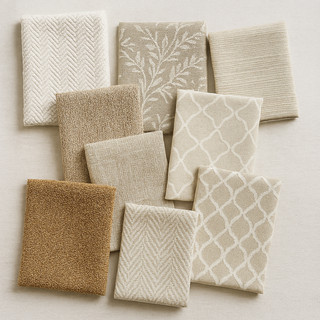
Order swatches before you order yards. This single habit prevents more disappointment than any spec sheet ever will.
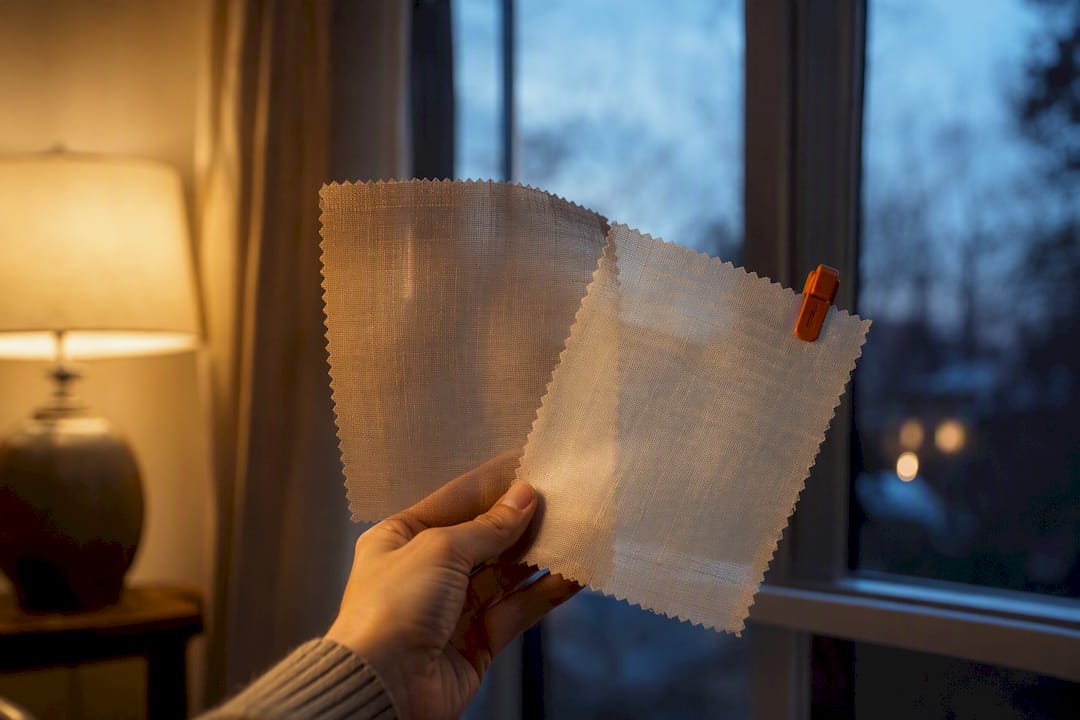
Hold the sample up to your actual window at night, using the same lamps you’d normally have on.
Have someone photograph the window from the street or sidewalk, or walk out and look yourself.
Try a flashlight held close to the fabric to roughly simulate a bright streetlight or porch light.
Check how the fabric looks and feels during the day too, since privacy is only half the decision.
This kind of hands-on swatch testing, done with your own lamps rather than a showroom’s lighting, is what actually predicts real-world privacy. If you can make out a clear silhouette from 10 to 15 feet away, plan on layering or moving up to a denser privacy weave. Trusting a product photo instead of a real test is how most sheer-curtain regret starts.
Installation Choices That Improve Privacy Without Changing the Look
How you hang the fabric matters almost as much as the fabric itself.
Mount high and wide. Extending the rod several inches beyond the window frame on each side closes the sightline gaps that show up at the edges. Wider mounting with generous overlap is one of the simplest ways to cut down what people outside can actually see.
Pick your hardware to match your depth. A double-track rod gives you two full layers; a shallow reveal roller fits when you don’t have room for a second track.
Leave room for stack-back. Sheers need to gather to one side without looking cramped, or you’ll lose the airy effect you wanted in the first place.
Booking a professional measure matters here, especially for double-track installs where the reveal depth and rod spacing need to be exact. Our measurement guide covers what to check before you order hardware.
Pro Tip: Ask your installer for at least three inches of overlap at the center meeting point. That small overlap closes the gap that’s usually the first thing a passerby notices.
Affordable Extras That Boost Night Privacy Without New Curtains
You don’t need to replace anything to get a meaningful improvement. A few low-cost additions work alongside the sheers you already own.
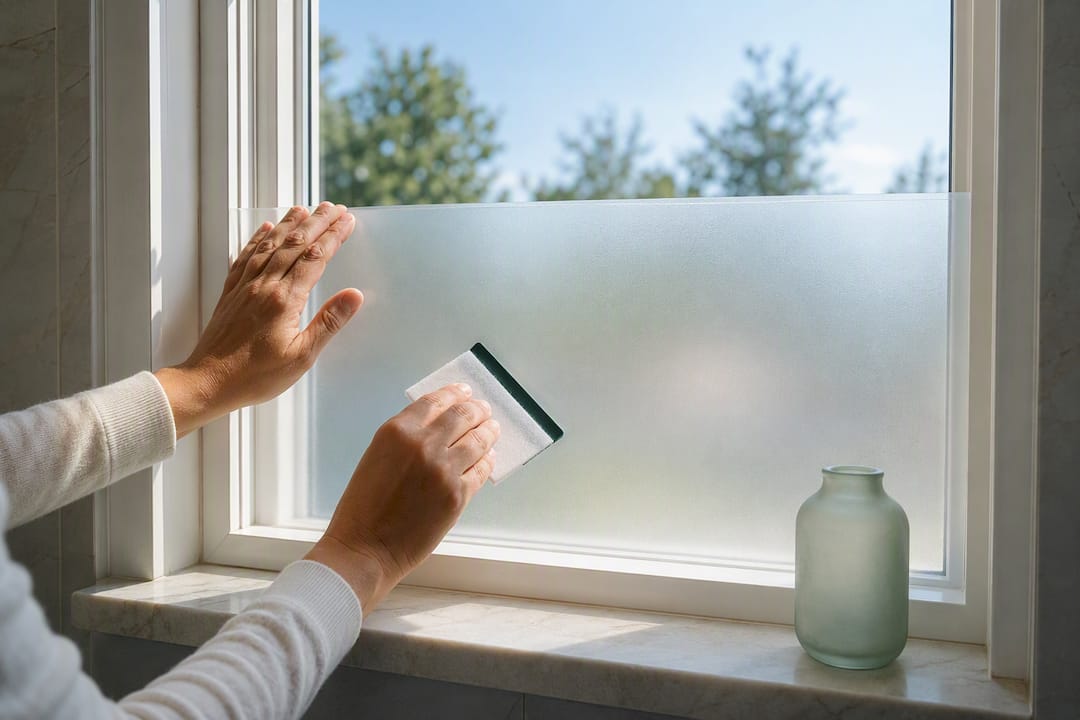
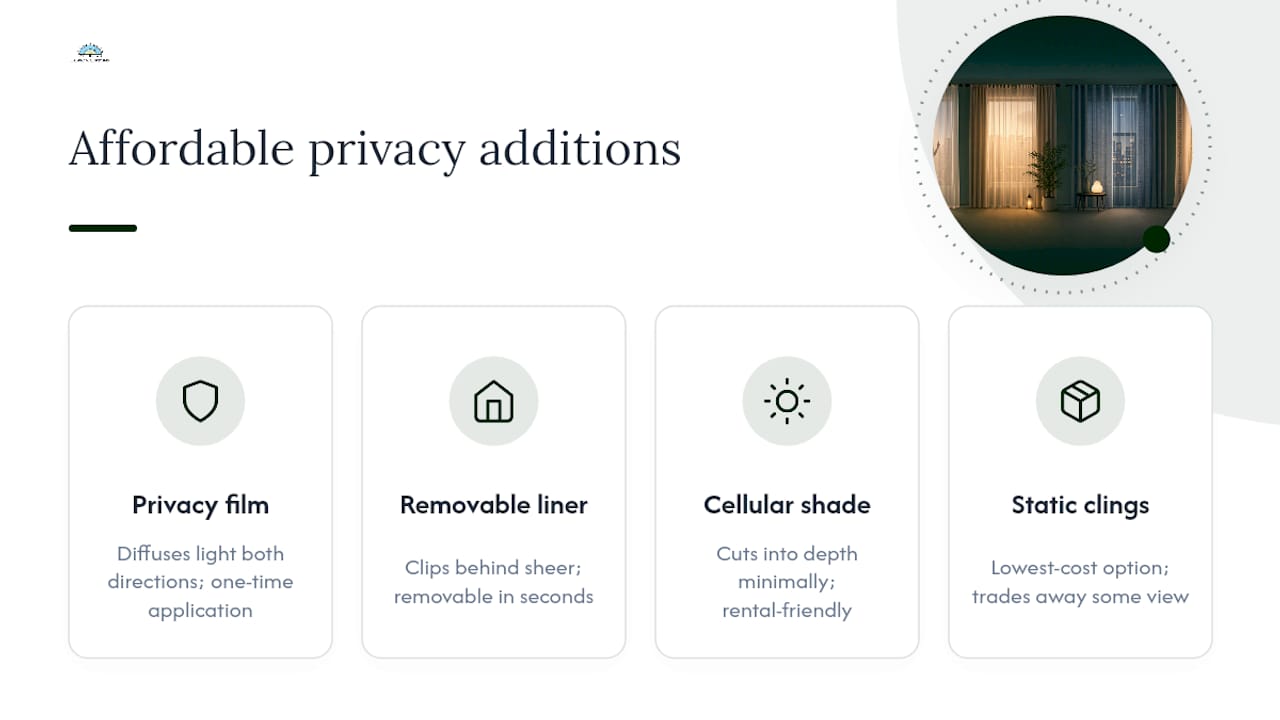
Privacy window film applied directly to the glass diffuses light from both directions, which softens silhouettes even when a lamp sits close to the window. It’s a one-time application and works especially well on smaller windows, bathroom glass, or any pane where full curtain layering feels like overkill.
Removable privacy liners clip or hook onto your existing curtain rod behind the sheer. They’re not as heavy as a full drape, but they add enough opacity to stop a lit room from broadcasting outward, and you can take them down in seconds when you want full light back.
Cordless cellular shades cut into a window’s depth minimally, which makes them a reasonable stopgap for rentals where a second full track isn’t practical or allowed by a lease.
Simple foil or frosted static clings work as a bottom-of-budget option for street-level windows, though they trade away some of the view.
Interior glass features also change how light and visibility move through a home, which is worth considering if your privacy problem starts at an interior doorway rather than the exterior window. Glass interior doors, for example, raise similar light-and-privacy trade-offs room to room, and the same layering logic that works on windows often applies there too.
None of these accessories replace a proper layered curtain setup for a bedroom. They’re the right call for a quick fix, a rental, or a room where full blackout isn’t the goal.
What People Get Wrong About Sheer Curtains and Privacy
The biggest misconception is that “sheer” and “private” were ever meant to describe the same thing. Sheers were designed to filter light and add softness to a room, not to block sightlines after dark. Expecting full night privacy from a fabric built for daytime diffusion sets you up for disappointment before you’ve even hung the panel.
A second myth: that thicker automatically means better. Weight matters, but weave tightness and yarn type do more work than raw gsm alone. A dense, tightly woven lightweight fabric can outperform a heavier, loosely woven one once the lamps are on.
Third, plenty of shoppers assume a single fabric swatch photographed in a bright showroom tells them how it will behave at home. It doesn’t. Showroom lighting rarely matches a bedroom lamp positioned two feet from the glass, which is exactly why the swatch test described earlier matters so much.
Finally, some homeowners believe layering ruins the sheer aesthetic. It doesn’t have to. A double-track setup keeps the sheer panel visible and untouched during the day. The second layer only comes into play once you want it, whether that’s a blackout drape or a shade tucked behind. The look you fell in love with stays exactly as it was; you’ve just added a privacy option for when you need it.
Maintenance That Keeps Your Sheers Doing Their Job
Sheer fabric thins over time, and that thinning is a privacy issue, not just a cosmetic one. Repeated washing, sun exposure, and years of handling loosen the weave slightly, which means a curtain that offered decent evening coverage when new can become more transparent after a few years of regular laundering.
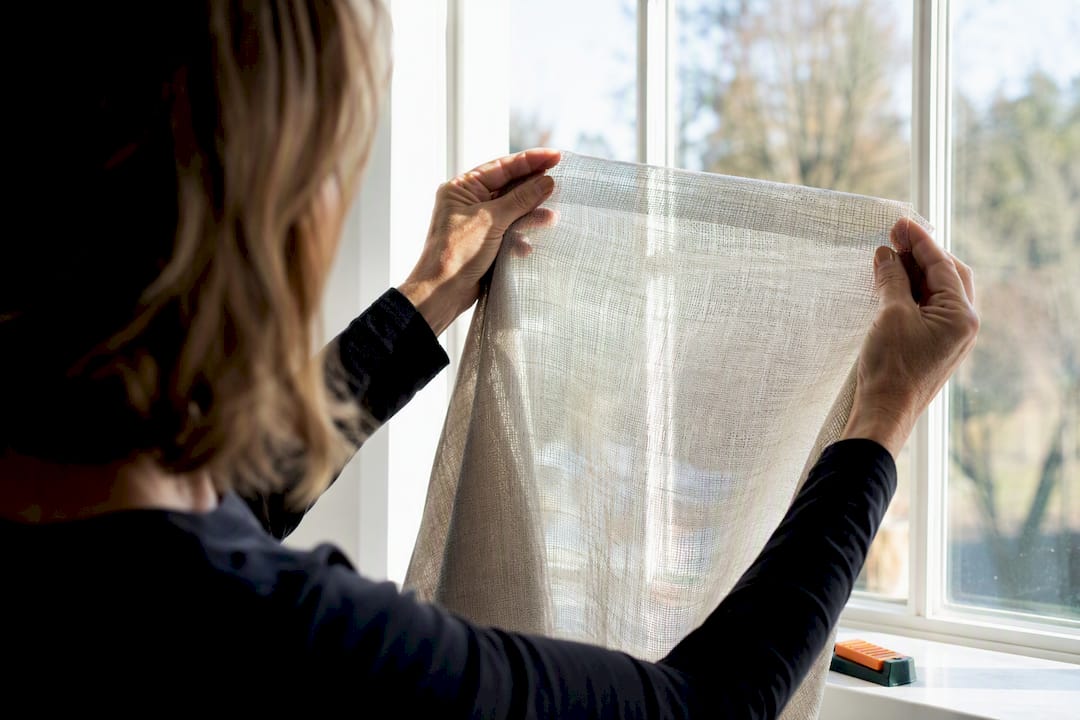
Check your sheers periodically by holding them up to a bright window during the day. If you can see clearly through sections that used to look more opaque, the fabric has thinned enough to affect your night privacy too. This happens faster with polyester voile than with denser cotton or linen blends, since lighter synthetic yarns tend to stretch and loosen with washing more than tightly spun natural fibers.
Follow the care label closely. Many sheers do better with gentle machine washing on cold, or hand washing for delicate weaves, followed by air drying rather than high heat, which can weaken fibers and accelerate thinning. Avoid over-bleaching, since brightening agents can degrade fiber strength even when the fabric still looks fine.
If a privacy-weave sheer has thinned to the point where lamp light passes through more than it used to, that’s your cue to either replace the panel or add a liner behind it rather than waiting for it to fail you on a night that matters.
Beautiful Windows Elgin’s Take on the Sample-First Approach
Guessing at fabric performance from a listing photo is how most privacy complaints start. The more reliable path is ordering swatches, testing them against your own lamps, and deciding from there whether a privacy weave alone will do or whether you need a lining behind it.
The approach of ordering fabric samples and testing opacity before committing to yards of fabric is recommended, along with options for lining and installation guidance to help homeowners make informed decisions. A tighter weave paired with the right lining solves more night-privacy problems than any single “miracle fabric” ever will.
— Marrion
Order Samples and Get Your Windows Measured Right
A fabric store and drapery service based in Columbia, SC, offers a sample-first approach to help customers request swatches, test them against their own lamps, and decide with confidence before committing to yards of fabric or a custom lining.
[

Browse the curtain lining fabric collection if you already know a second layer is the right call, or start with our guide to what a sheer curtain panel actually is if you’re still narrowing down the weave. For a bolder look once privacy is sorted, the stripe fabric collection pairs well as a drapery layer behind a sheer front panel.
When you request a consultation, expect a straightforward measure of your window depth and width, a conversation about which rooms need full night privacy versus soft daytime diffusion, and recommendations on lining or double-track hardware suited to your space. Reach out through Beautifulwindowselgin to get your samples moving and your measurement scheduled.
Sources
Recommended
Comments