


Layer window treatments like a pro: style, function, comfort
- Woven Dwelling
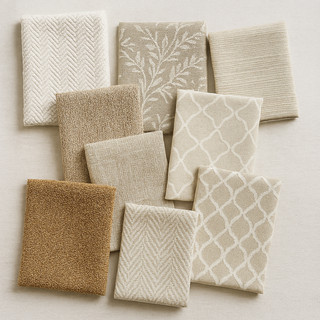
- 4 days ago
- 9 min read

TL;DR:
Layered window treatments enhance insulation, privacy, and aesthetics by combining hard, soft, and accent layers.
Choosing the right number of layers depends on room function, climate, and design goals, with two or three layers being common.
Effective layering involves selecting functional fabrics, proper hardware, and thoughtful placement to create beautiful, efficient, and purposeful treatments.
Window treatments do far more than dress up a room. Most homeowners select curtains for color or pattern alone, overlooking the real work those layers can do: managing heat loss, controlling daylight, and shaping the entire atmosphere of a space. A single panel rarely accomplishes all of that. Thoughtful layering, however, brings together multiple treatment types to solve real problems while elevating the look of any room. This guide walks through each layer, explains what it contributes, and offers clear strategies for applying a layered approach in your own home.
Table of Contents
Key Takeaways
Point | Details |
Layering boosts insulation | Combining blinds, drapes, and other layers can cut energy loss and keep interiors more comfortable. |
No one-size-fits-all | Choose two or three layers based on your style, privacy, and climate needs—customization is key. |
Balance function and style | Each layer should offer a unique benefit, whether it’s blocking light, adding softness, or saving energy. |
Mistakes to avoid | Don’t mix clashing materials or crowd your window—select layers intentionally for best results. |
What are the main layers in window treatments?
Modern window treatments are typically organized into three categories: hard treatments, soft treatments, and accent or accessory layers. Understanding what each category does makes it much easier to build a system that works for your space.
Hard treatments are the structural layer closest to the glass. These include roller shades, cellular shades, Roman shades, and blinds made from wood, faux wood, or aluminum. They provide the most direct control over light and privacy and often do the heaviest lifting for insulation. Soft treatments are the fabric layer, typically curtains or drapes hung from a rod in front of the hard treatment. They add warmth, color, and texture to a room while reinforcing the privacy and light-blocking qualities of the inner layer. Accent and accessory layers include sheers, valances, swags, and cornices. These are often the finishing touch that gives a window its polished, designed appearance.
The window treatment trends shaping today’s interiors reflect a growing awareness of how these layers interact. Designers are moving away from single-treatment solutions toward intentional combinations that serve both form and function.
Here is a quick reference for the three primary layers:
Layer | Examples | Primary purpose | Common materials |
Hard (inner) | Blinds, cellular shades | Light control, insulation | Wood, aluminum, polyester |
Soft (outer) | Drapes, curtains | Aesthetics, added privacy | Cotton, linen, velvet, jacquard |
Accent | Sheers, valances | Softness, finishing detail | Sheer voile, organza, embroidered fabric |
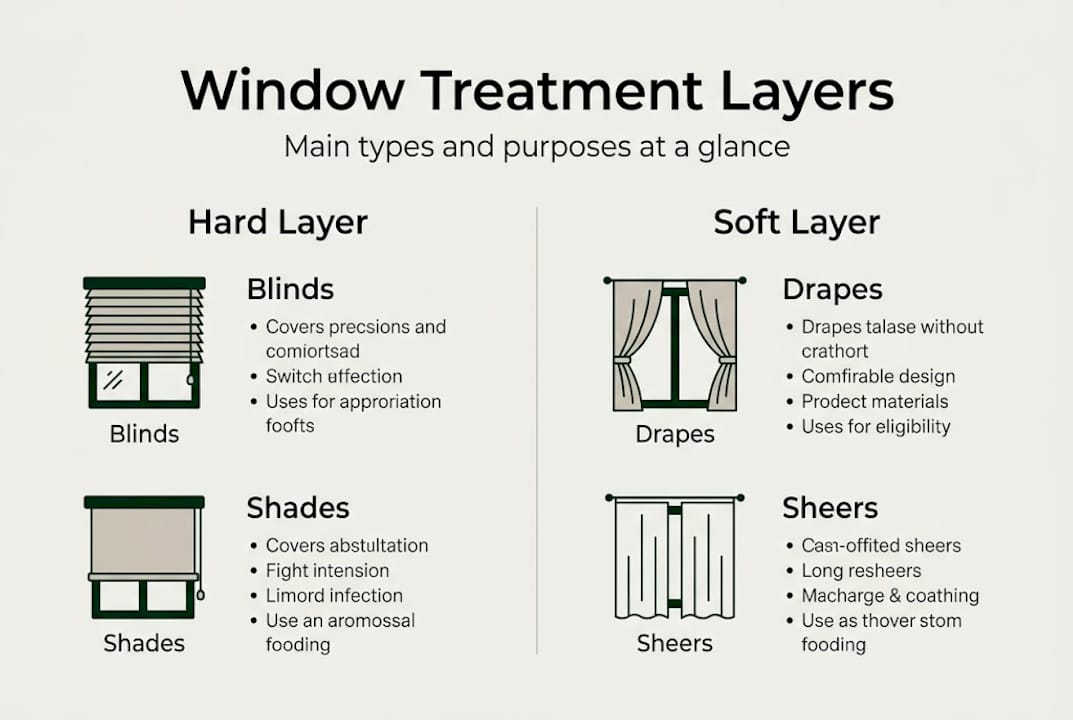
The benefits of combining these layers are measurable. The U.S. Dept. of Energy confirms that layered treatments improve thermal insulation by trapping air between the window glass and the room, reducing both heat gain in summer and heat loss in winter. This directly lowers HVAC use and limits UV damage to furnishings.
Key benefits of a layered window treatment system:
Insulation: Multiple layers trap air and reduce thermal transfer through glass
Privacy: Layers can be adjusted independently for varying levels of visibility
Light control: Combine blackout and sheer layers for full-range daylight management
Ambiance: Fabric texture, color, and drape create depth and visual warmth
UV protection: Outer layers shield inner furnishings from fading
Exploring 2026 stylish window trends reveals that layered treatments are now a design standard, not a luxury reserved for formal spaces.
Layering strategies: Two-layer vs. three-layer systems
With an understanding of the basic layers, it’s important to choose an approach that matches your space and goals.
Not every window needs three layers. The right system depends on the room’s function, the climate you live in, and the level of design detail you want. According to a layered treatments guide, there is no universal best approach. Some designers prefer three-layer systems for a balanced combination of inner function, middle filtration, and outer style. Others favor a two-layer setup pairing a hard functional treatment with a soft decorative one, which suits minimalist or contemporary spaces well.
Feature | Two-layer system | Three-layer system |
Cost | Lower | Higher |
Installation ease | Simpler | More complex |
Aesthetic depth | Moderate | High |
Energy efficiency | Good | Excellent |
Best for | Modern, small rooms | Traditional, larger spaces |
Follow these steps to determine which system fits your window:
Identify the room’s primary need. Is it sleep quality (bedroom), privacy (bathroom), or ambiance (living room)?
Assess the window’s sun exposure. South and west-facing windows often benefit from a third layer for UV and heat management.
Consider your climate. Colder regions gain more from the extra insulation a three-layer system provides.
Set a realistic budget. Quality two-layer combinations often outperform budget three-layer setups.
Evaluate the room’s scale. Smaller rooms can feel crowded with too many layers; larger rooms may look sparse without them.
The window treatment layering strategies that work best in practice are those built around the room’s actual demands, not a formula.
Pro Tip: Don’t default to more layers simply because it seems like the thorough choice. A well-chosen two-layer system often delivers cleaner results and is easier to maintain than an overcrowded three-layer arrangement.
How each layer enhances function and aesthetics
Regardless of how many layers you use, each should be chosen for its functional and design contribution.
The inner layer, typically a shade or blind, handles the most direct interaction with light and heat. Cellular shades, for example, use a honeycomb structure to trap air and reduce thermal transfer. The middle layer, when present, is often a sheer panel. Sheers filter daylight beautifully, softening the quality of light in a room without eliminating it. They also add visual depth between the hard treatment and the outer drape. The outer layer, usually a full drape or curtain in a heavier fabric, contributes color, pattern, and the sense of height and volume that defines a room’s character.

For textural window treatment ideas, combining a linen sheer with a jacquard satin drape creates a refined contrast that reads as both elegant and practical.
Common mistakes that undermine layered treatment goals:
Choosing fabrics that are too similar in weight, which flattens the visual effect
Hanging all layers on the same rod, which limits independent adjustment
Ignoring the lining of outer drapes, which reduces both insulation and drape quality
Selecting colors that compete rather than complement across layers
Overlooking hardware scale, which can make even quality fabrics look unfinished
The U.S. Department of Energy notes that energy-efficient window coverings can reduce heat loss through windows by up to 10%, with layered and lined treatments performing significantly better than single-panel solutions.
Pro Tip: Adding an interlining, a soft layer sewn between the face fabric and the lining of your drape, dramatically improves both the thermal performance and the visual fullness of the outer layer. It’s one of the most cost-effective upgrades available in custom drapery.
Practical tips for layering window treatments in any room
Knowing the theories is helpful, but applying them well is what transforms a space. Here’s how to put the layering principles to practical use.
Quick tips for pairing fabrics and managing light:
Pair a blackout roller shade with sheer curtains in a bedroom for flexible light control from total darkness to soft morning glow
Use linen or cotton sheers in living rooms to maintain privacy without sacrificing natural light
In kitchens, choose moisture-resistant fabrics for inner layers and keep outer treatments simple and easy to launder
For seasonal adaptability, select outer drapes in heavier fabrics for winter and swap to lighter weaves in warmer months
Match the rod and bracket finish to the room’s hardware for a cohesive, intentional look
A step-by-step method for building layers in any room:
Start with the window itself. Measure accurately, noting any trim, depth, or architectural features that affect mounting options.
Install the inner layer first. Mount shades or blinds inside the frame or close to the glass for maximum thermal benefit.
Add the middle layer if needed. Sheers on a separate rod or track allow independent operation.
Hang the outer layer last. Position the rod high and wide to maximize perceived ceiling height and window size.
Adjust and test. Operate each layer independently to confirm they work together without tangling or crowding.
For bedroom windows, the priority is usually sleep quality and privacy, making a blackout inner layer essential. Living rooms benefit from flexible light management, where a sheer middle layer earns its place. Kitchens and bathrooms often do well with just two layers, keeping maintenance manageable.
Professionals achieve cohesive results by treating the window as a design element with its own scale and proportion. The layered window tips shared by experienced designers consistently emphasize hardware placement and fabric weight as the two factors most often overlooked by homeowners. Getting those right, before selecting patterns or colors, sets the foundation for a result that looks intentional and refined. The energy-efficient window coverings research also supports starting with function and building aesthetics on top, rather than the reverse.
Rethinking window treatment layers: Why less can be more
The prevailing advice in home decor tends to push toward more: more layers, more fabric, more visual complexity. That approach has its place in formal or traditional interiors. But for many modern homes, especially smaller spaces or rooms with clean architectural lines, additional layers can work against the design rather than for it.
The most effective window treatments are purpose-driven. Each layer should earn its position by solving a specific problem, whether that’s blocking morning light, retaining warmth, or adding a refined finishing detail. When a layer serves no clear function, it adds cost, weight, and maintenance without contributing meaningful value.
Exploring minimalist window layering reveals that professional designers increasingly favor fewer, better layers over complex arrangements. A single, beautifully lined drape in a quality jacquard or embroidered fabric often makes a stronger statement than three layers of mediocre materials. Sustainability also plays a role here: fewer layers mean less fabric production, less hardware, and longer-lasting installations. Intentional simplicity is not a compromise. It’s a design choice that often produces the most lasting results.
Get expert help for your custom window layers
If you’re ready to see the difference that perfectly chosen layers make, or need a jumpstart, here’s how to get professional guidance.
Building a layered window treatment system that balances insulation, privacy, and style is easier with the right materials and expert input. At Beautiful Window Elgin, you’ll find an extensive selection of designer fabrics, from cotton and embroidered textiles to jacquard satin, all suited to custom drapery and layered treatment projects.

Whether you’re outfitting a single room or sourcing materials for a full home project, the team offers design consultations to help you select fabrics that work together beautifully. For spaces that extend beyond the interior, explore durable outdoor fabric options that bring the same layered approach to exterior settings. Quality materials make every layer count.
Frequently asked questions
What are the main benefits of layering window treatments?
Layering improves insulation, privacy, and style by combining the strengths of different treatment types. Layered treatments are confirmed to reduce HVAC use by improving thermal performance at the window.
How many layers should my window treatments have?
Most windows use two or three layers, but the best number depends on your functional and design needs. As design experts note, there is no universal rule, so tailor the system to your room’s climate and purpose.
What mistakes should I avoid when layering window treatments?
Avoid mismatched fabric weights and mounting all layers on the same rod, as both limit the visual and functional effectiveness of each layer. Select each treatment for its individual purpose before considering how they look together.
Do layered treatments really save energy?
Yes. Proper layering creates air pockets between the glass and the room, which reduce heat transfer and lower energy costs. The thermal insulation benefit is most pronounced when the inner layer fits snugly within or close to the window frame.
Recommended

Comments