


Top designer fabrics for custom drapery and upholstery
- Woven Dwelling
- 4 days ago
- 8 min read
TL;DR:
Fabric choice affects light, durability, and appearance, requiring careful evaluation of multiple criteria.
Different fabrics like linen, silk, velvet, and performance blends suit specific uses based on their performance profiles.
Testing swatches in actual room conditions ensures satisfactory long-term results beyond specifications.
Choosing the right designer fabric for a custom drapery or upholstery project is rarely as simple as picking a color you love. The fabric you select determines how light moves through a room, how well a sofa holds up to daily use, and whether your drapes fall in clean, elegant folds or buckle at the edges. Aesthetics matter, of course, but performance and tactile quality are equally important factors that separate a beautiful result from a lasting one. This article walks through the key evaluation criteria, top fabric options, a side-by-side comparison, and practical project recommendations to help you make confident, informed choices.
Table of Contents
Key Takeaways
Point | Details |
Evaluate by project needs | Choose designer fabrics based on durability, drape, and cleanability for each intended use. |
Consider Martindale score | A higher Martindale number means better abrasion resistance but isn’t the only factor for upholstery performance. |
Test with samples in real spaces | Always check fabric samples in your actual room to assess light, texture, and color. |
Balance aesthetics with function | Select fabrics that combine beautiful design, feel, and long-term performance for your home. |
How to evaluate designer fabrics: Key criteria for homeowners and designers
With a foundational understanding of the selection challenge, let’s break down the specific criteria that matter most for designer fabric choice.
Not every fabric suits every application. A silk that looks breathtaking as a formal drape would fail quickly as sofa upholstery. Understanding how to evaluate fabrics across a consistent set of criteria is what separates good-looking results from genuinely functional ones.
Here are the primary factors worth assessing before committing to any designer fabric:
Appearance and pattern clarity: How does the color, texture, and surface design read at a distance and up close?
Drape quality: Does the fabric fall softly in folds, or does it hold stiffness that disrupts the silhouette? Drape influenced by fiber content, elasticity, shear angle, and thickness, meaning drapery fabrics must prioritize this quality above most others.
Martindale abrasion resistance: This standardized test rubs a fabric surface in a circular motion until it shows visible wear. Residential upholstery typically requires 18,000 to 25,000 rubs minimum, while heavy household use calls for more.
Cleanability: Can the fabric be spot-cleaned, dry-cleaned, or machine-washed? This matters significantly for upholstery in active households.
Light control: For drapery, translucency determines how much sunlight filters through. For bedrooms or media rooms, a heavier weave or blackout lining is usually necessary.
Lightfastness: This measures how resistant a fabric’s color is to UV fading. It’s especially relevant for fabrics near south-facing or west-facing windows.
Drapery and upholstery have different priorities by design. When choosing fabric for drapery, softness, weight, and translucency take center stage. With upholstery, the focus shifts to abrasion resistance, stain resistance, and ease of cleaning. Our upholstery fabric guide covers these distinctions in more detail. It’s also worth noting that the role of drapery fabrics extends beyond aesthetics into acoustic control and energy efficiency.
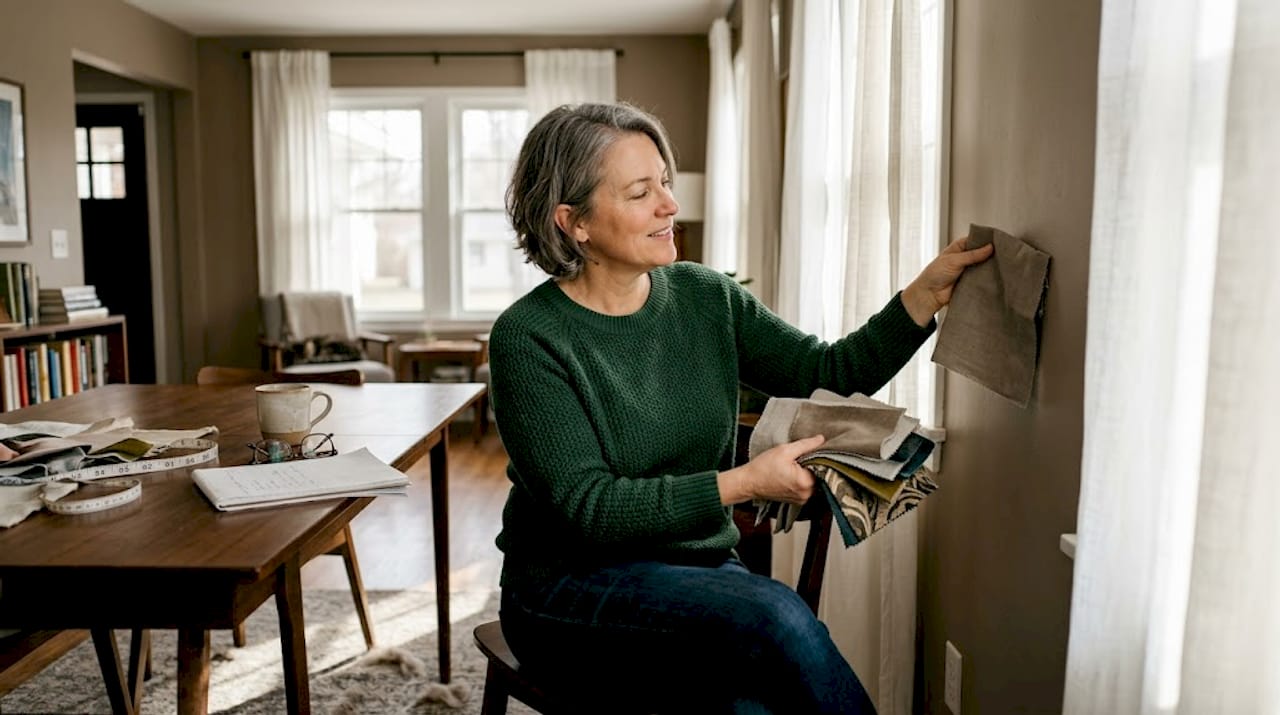
Pro Tip: Always request swatches that are at least 6 inches square and test them in the actual room. Fabric color and sheen shift dramatically depending on whether the light source is natural or artificial, morning or evening.
Top examples of designer fabrics for drapery and upholstery
Once you know how to evaluate fabrics, it’s time to look at the leading types and their unique strengths for both drapes and upholstery.
Each fabric category has a distinct performance profile. Knowing those profiles helps you match the right material to the right application without guessing.
Linen: Valued for its natural texture and relaxed drape, linen is a strong choice for casual and transitional interiors. It filters light beautifully but wrinkles easily, so it works better for stationary panels than frequently drawn drapes.
Silk: Silk brings an unmatched luminosity and fluid drape to formal drapery. It is delicate and prone to sun damage, making it best suited for rooms with filtered or indirect light.
Velvet: Dense, plush, and heavy, velvet offers excellent light control and a rich visual depth. It’s a strong option for blackout-style drapes and accent upholstery alike.
Jacquard: Woven directly into the fabric, jacquard patterns are durable and dimensional. Weave’s impact on drape is significant in jacquard construction, giving it structure that works well for both formal drapery and decorative upholstery.
Chenille: Soft and textured, chenille provides a cozy, dimensional surface ideal for family sofas and armchairs. It performs well in mid-range Martindale ratings.
Faux suede: A practical alternative to natural suede, faux suede is stain-resistant, durable, and easy to clean. It’s a reliable choice for pet-friendly or high-traffic upholstered pieces.
Performance blends: These synthetic or blended fabrics are engineered for durability, stain resistance, and consistent color. They are particularly well-suited for family living rooms and commercial-adjacent settings.
For typical residential upholstery, the practical Martindale range falls between 18,000 and 35,000 rubs, with heavier-use pieces benefiting from the higher end. You’ll find a detailed breakdown of curtain fabric types on our blog for additional reference.
Design scenarios to consider: A formal dining room pairs beautifully with floor-length silk or heavyweight jacquard drapes. A children’s bedroom benefits from performance-blend or faux suede upholstered seating. A sunroom or reading nook calls for sheer linen panels that diffuse light without blocking the view. These tips for choosing drapery can further guide your room-specific decisions.
Pro Tip: A high Martindale rating doesn’t automatically mean the fabric is the best choice. Watch for pilling risk and lightfastness ratings, which can undermine durability even in technically abrasion-resistant materials.
Designer fabric comparison chart: Features, performance, and best uses
Knowing the standout features is one thing, but seeing fabrics side-by-side clarifies how they stack up for practical use.
Fabric type | Martindale rating | Drape quality | Cleanability | Lightfastness | Ideal use |
Linen | N/A (drapery) | Excellent | Moderate | Good | Casual drapery, roman shades |
Silk | N/A (drapery) | Outstanding | Dry-clean only | Low | Formal drapery, low-light rooms |
Velvet | 20,000 to 30,000 | Very good | Moderate | Moderate | Blackout drapes, accent upholstery |
Jacquard | 25,000 to 35,000 | Good | Moderate | High | Formal drapery, decorative upholstery |
Chenille | 18,000 to 30,000 | Moderate | Moderate | Moderate | Family sofas, armchairs |
Faux suede | 25,000 to 40,000 | Moderate | Excellent | High | Pet-friendly upholstery, ottomans |
Performance blend | 30,000 to 50,000+ | Variable | Excellent | Very high | High-traffic upholstery, family rooms |
Martindale benchmarks establish 18,000 to 25,000 rubs for general domestic upholstery, 25,000 to 35,000 for heavy domestic use, and 30,000 or more for moderate contract settings. These numbers help narrow your shortlist, but they are one input among several.
Key strengths and limitations to keep in mind:
Silk offers the finest drape but requires careful placement away from direct sunlight
Faux suede and performance blends lead in cleanability and abrasion resistance
Jacquard balances durability and visual complexity better than most woven fabrics
Chenille can pill over time if the weave density is lower than the Martindale rating suggests
Linen and silk are not rated on the Martindale scale because they are not intended for upholstery
For a guided approach to matching these attributes to your window project, our drapery fabric selection guide is a practical starting point.
Situational recommendations: Best designer fabric choices for popular projects
To make this practical, here’s what we recommend for your most popular custom drapery and upholstery scenarios.
Blackout bedroom drapes: Heavyweight velvet or blackout-backed linen are the most reliable options. Both block light effectively and add visual warmth. Velvet also contributes meaningful acoustic insulation.
Kid- and pet-friendly living room sofas: Performance-blend chenille or faux suede are the clear leaders. Both resist staining, hold up to abrasion, and are easy to spot-clean without damaging the surface.
Sunroom roman shades: Sheer or semi-sheer UV-resistant linen is ideal. It diffuses harsh afternoon light while preserving the outdoor view. Review our window treatment fabric tips for sunroom-specific considerations.
Formal living or dining room drapes: Silk or heavyweight jacquard in neutral or tonal patterns creates visual impact without overwhelming the space. Both fall beautifully in full-length panels.
Statement accent chairs: Jacquard or velvet in a bold color or refined woven pattern gives an accent chair the presence it needs without requiring full-room commitment to that palette.
Expert reminder: A fabric’s Martindale rating is only one measure of real-world performance. Why Martindale isn’t everything becomes clear when high-rated fabrics pill or fade because lightfastness and weave density were not considered alongside abrasion resistance.
Do’s and don’ts for popular projects:
Do: Request upholstery cleaning guidance specific to your chosen fabric before finalizing your order
Do: Match the fabric weight to the fullness of the treatment for drapery
Don’t: Choose silk for south-facing windows without UV-filtering window film or lining
Don’t: Assume a high Martindale number means the fabric is suitable for pet claws or sharp abrasions
For a full walkthrough of how custom projects come together from fabric selection to installation, our custom drapery project workflow provides step-by-step clarity.
Our take: What most miss about designer fabric selection
These situational tips help, but there’s a key element many buyers overlook—here’s our candid take.
There’s a recurring pattern we observe: buyers spend significant time researching published specs and chasing trending designer names, then feel uncertain the moment the fabric arrives and doesn’t look quite right in their space. The specifications are useful reference points, not guarantees of satisfaction.
The fabrics that consistently deliver the best long-term results are the ones tested in person, in the actual room, under the actual lighting. The impact of fabric on style is far more nuanced than any spec sheet can capture. A fabric that photographs beautifully in a showroom may appear flat or overly stiff in a north-facing living room.
Clients who invest in proper swatching, who take the time to consult with experienced fabricators, and who are willing to adjust course based on hands-on testing consistently achieve better outcomes. The most sophisticated designer fabrics deserve that level of attention.
Shop premium designer fabrics and get personalized guidance
Ultimately, success with designer fabrics comes from smart choices and the right support—discover how our solutions can help.
At Beautiful Window Elgin, we carry a curated selection of designer fabrics suited for custom drapery and upholstery projects of every scale. From refined jacquard satins to performance-grade upholstery textiles, our inventory is organized to help you find the right fabric efficiently.
We also offer personalized design consultations to help you match fabric performance to your specific room, lifestyle, and aesthetic. Whether you’re sourcing material for a single accent chair or outfitting an entire home, you can browse designer fabrics across our full collection or explore specialized options like our shop waterproof canvas fabric for outdoor furniture projects. Request samples, book a consultation, and let our team help you move from inspiration to installation with confidence.
Frequently asked questions
What is the Martindale rating and why does it matter for upholstery fabric?
The Martindale rating measures a fabric’s abrasion resistance by counting the number of rub cycles before visible wear appears. Martindale benchmarks start at 18,000 to 25,000 rubs for general domestic upholstery, making it one of the most reliable indicators of durability for high-use pieces.
Which designer fabrics are best for blackout drapery in bedrooms?
Heavy velvets, lined silks, and blackout-backed linens are the strongest performers for light control and thermal insulation. Drape influenced by fiber content also affects how cleanly these heavier fabrics fall in full-length panels.
How can I prevent pilling and fading in high-use upholstered furniture?
Select fabrics with strong weave construction, a balanced Martindale score, and a high lightfastness rating. Why Martindale isn’t everything is a real consideration—fabrics that score well on abrasion but poorly on weave density or UV resistance can still disappoint over time.
What is the advantage of jacquard or chenille for designer projects?
Jacquard and chenille both offer rich texture and visual depth that flat-woven fabrics cannot replicate. Weave’s impact on drape gives jacquard in particular a structured quality that holds up beautifully in formal drapery and statement upholstery applications.
Recommended
Comments