


What is cotton fabric? Qualities, types, and home decor use
- Woven Dwelling
- 2 days ago
- 9 min read
TL;DR:
Cotton fabric’s performance depends on fiber quality, weave type, and post-processing treatments.
Long-staple cotton like Egyptian or Pima offers increased durability and a smoother finish.
Match fabric weight and weave to the intended use for optimal durability and aesthetic appeal.
Cotton is one of the most widely used natural fibers in home decor, yet the assumption that all cotton fabrics perform equally is one of the most common and costly mistakes homeowners and interior designers make. Whether you are sourcing fabric for custom drapes, upholstered chairs, or decorative panels, the specific type of cotton, its weave structure, and how it was processed will determine everything from how it drapes to how long it lasts. This guide walks through the fundamentals of cotton fabric, the processing steps that differentiate quality levels, the key weave types suited for home applications, and the performance realities you need to know before committing to a project.
Table of Contents
Key Takeaways
Point | Details |
Natural comfort | Cotton fabric offers exceptional breathability and softness, making it ideal for home decor. |
Choose by project | The weave, weight, and finish of cotton should match your specific use—whether drapery or upholstery. |
Consider blends | Cotton blends often improve durability and practicality for busy households. |
Inspect quality markers | Look for long-staple, pre-shrunk, or treated cotton fabrics to maximize performance and longevity. |
Mind the drawbacks | Untreated cotton can shrink, fade, or stain easily unless preventive steps are taken. |
What is cotton fabric? Origins and core characteristics
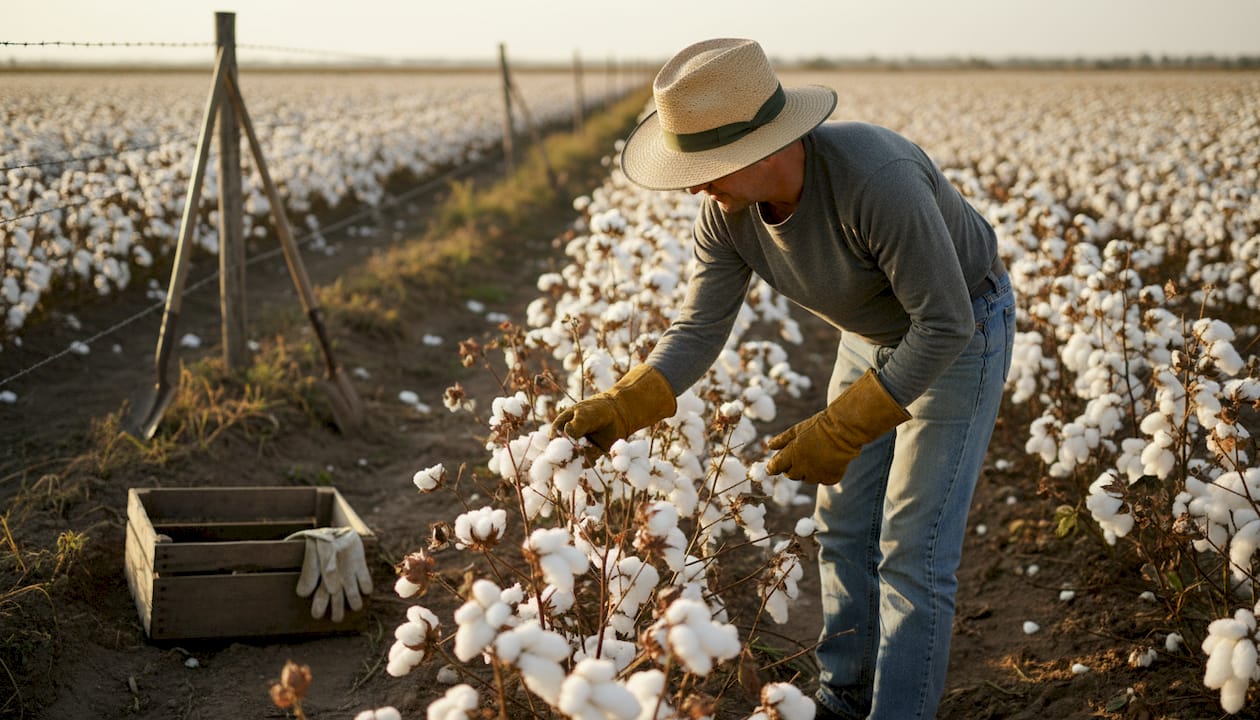
Cotton fabric begins with a plant. Specifically, it originates from the seed fibers of the Gossypium plant genus, a crop cultivated across warm climates worldwide for thousands of years. The fluffy, white fibers that surround each seed are harvested and processed into the textile we recognize as cotton. What makes it so valuable in home applications is not sentiment or tradition. It is chemistry and structure.
At its core, cotton fabric is a natural textile made primarily of cellulose, a plant-based polymer that gives the fiber both its strength and its softness. The cellulose content in cotton typically ranges between 88 and 96 percent, and this concentration directly influences how the fabric behaves when exposed to moisture, heat, and everyday use. Higher cellulose content contributes to better absorbency, improved dye uptake, and greater natural resilience.
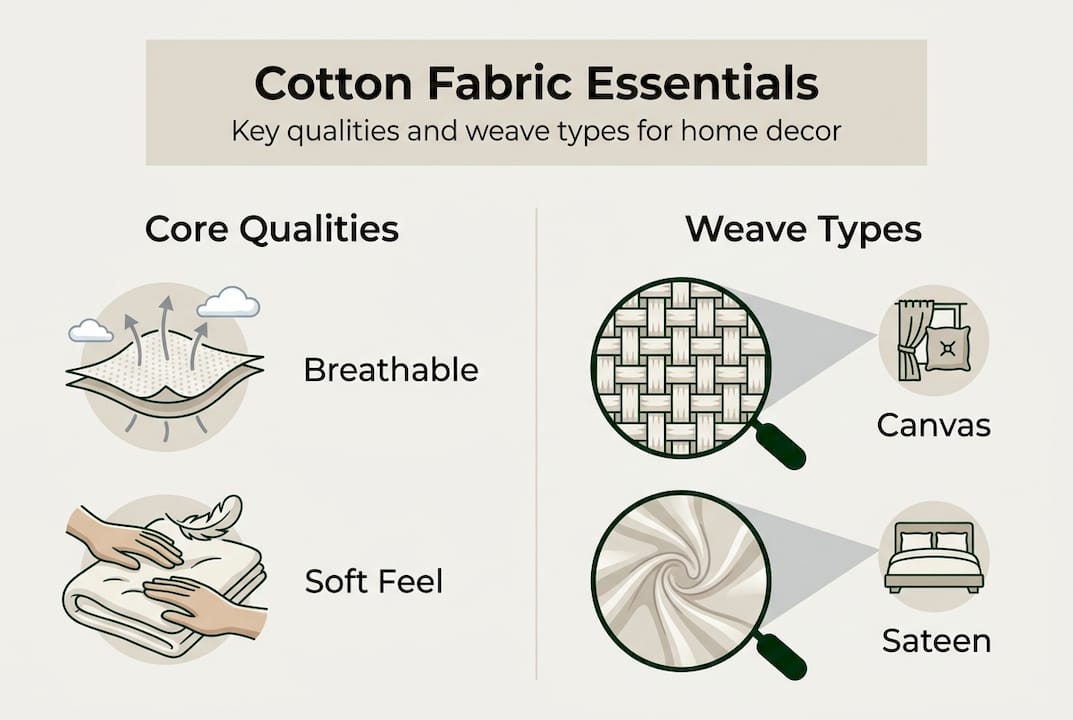
For home decor applications, what matters most are the inherent physical properties that cellulose enables. Cotton fibers have a hollow core structure that allows air to circulate freely, which is why cotton window treatments feel breathable in warm rooms. According to cotton fabric properties, key characteristics include high absorbency at a moisture regain rate of 7 to 8 percent, a naturally soft hand feel, hypoallergenic qualities that suit allergy-sensitive households, and full biodegradability at end of life. These properties are not just talking points. They translate directly into how the fabric performs inside your home.
For homeowners exploring cotton fabric for curtains, understanding these base characteristics is the first step toward selecting a material that will look and function well for years. More detail on cotton fiber characteristics confirms that the fiber’s natural crimp also contributes to its ability to hold shape in woven structures.
Essential cotton properties for home applications:
Breathability: Hollow fiber structure supports air circulation, ideal for window treatments in living spaces
Absorbency: 7 to 8 percent moisture regain rate; performs well in humid environments
Softness: Natural cellulose surface is gentle and comfortable, even in upholstered pieces
Hypoallergenic: Unlikely to cause skin irritation, suitable for bedrooms and children’s spaces
Biodegradable: An environmentally responsible choice for eco-conscious homeowners
Dye receptivity: Accepts color richly, allowing for vibrant and lasting tones in printed or solid fabrics
Property | Cotton value | Relevance to home decor |
Moisture regain | 7 to 8 percent | Performs well in humid rooms |
Cellulose content | 88 to 96 percent | Drives softness and dye uptake |
Fiber type | Natural, plant-based | Biodegradable and hypoallergenic |
Breathability | High | Best for light drapery and curtains |
From plant to fabric: How cotton is processed and why quality varies
Now that you know what cotton is made of, understanding how it is processed reveals why not all cotton fabrics deliver the same performance. Two bolls harvested from the same field can end up in fabrics with dramatically different textures, durability, and price points, depending on how they were handled after harvest.
The production of cotton fabric follows a structured sequence. Each stage introduces variables that either preserve or compromise the fiber’s natural qualities.
Harvesting: Bolls are picked when fully mature. Mechanical harvesting is efficient but can introduce debris and short fiber fragments.
Ginning: A cotton gin separates the fiber (lint) from the seed and hull. This step affects fiber cleanliness and length preservation.
Carding and combing: Fibers are aligned and short fibers removed. Combed cotton, which undergoes extra processing, produces a smoother, stronger yarn.
Spinning: Aligned fibers are twisted into yarn. Tighter spinning produces stronger, denser fabric; looser spinning creates softer, more relaxed textiles.
Weaving or knitting: Yarn is interlaced on a loom or knit into fabric. Weave type and thread count define the final fabric’s weight, texture, and performance.
The single most important quality marker at the fiber level is staple length, which refers to the length of individual cotton fibers. Longer staples produce stronger, smoother, more pill-resistant fabrics. Pima and Egyptian cotton, which feature extra-long staple fibers, are widely prized in premium home decor fabrics for this reason. Short-staple cotton may feel acceptable initially but tends to pill and wear faster under upholstery or drapery conditions.
For designers specifying cotton drapery benefits, staple length should be one of the first questions asked when evaluating a fabric’s construction.
Staple type | Length range | Typical application |
Short staple | Under 1 inch | Basic apparel, budget home textiles |
Medium staple | 1 to 1.125 inches | Standard upholstery, general drapery |
Long staple (Pima) | 1.125 to 1.25 inches | Premium curtains, quality upholstery |
Extra-long staple (Egyptian) | Over 1.375 inches | Luxury drapery, fine upholstered pieces |
Pro Tip: Always specify pre-shrunk or sanforized cotton for custom window treatments and upholstery projects. Untreated cotton can shrink significantly after the first wash, which undermines the fit of tailored drapes and fitted upholstery.
Key types of cotton weaves for home decor
Once cotton is spun into yarn, how it is woven makes all the difference for end use, especially in custom home projects. The same cotton fiber can become a sheer voile curtain or a rugged upholstery canvas, depending entirely on weave structure.
The most relevant cotton weave types for home decor include canvas, twill, sateen, poplin, and voile. Each offers a distinct balance of weight, texture, and function.
Canvas and duck: A heavyweight, tightly woven plain weave fabric with exceptional durability. Canvas and duck weaves are the preferred choice for upholstery on chairs, ottomans, and benches. Their tight structure resists tearing and holds shape under regular use.
Twill: Characterized by a diagonal rib pattern created by offsetting the weave. Twill cotton is durable, slightly more flexible than canvas, and naturally conceals stains due to its surface texture. It is a strong candidate for cotton drapery in high-traffic rooms.
Sateen: A weave structure that places more yarn on the fabric’s surface, creating a smooth, lustrous finish. Sateen cotton is often used for elegant drapery panels where a subtle sheen is desirable.
Poplin: A plain weave with a fine horizontal rib, producing a crisp, smooth fabric. Poplin works well for structured curtains and Roman shades where a clean, tailored look is the goal.
Voile and leno: Open, lightweight weaves that allow light to filter through. Voile cotton is the classic choice for sheer curtains and layered window treatments. For a broader overview of curtain fabric types, including non-cotton options, it helps to compare weaves side by side.
Weave type | Weight (approx. GSM) | Best use |
Canvas/duck | 300 to 500 | Heavy upholstery, outdoor covers |
Twill | 200 to 350 | Durable drapery, mid-weight upholstery |
Poplin | 100 to 180 | Structured curtains, Roman shades |
Sateen | 130 to 220 | Decorative drapery, elegant panels |
Voile/leno | 60 to 120 | Sheer curtains, layered treatments |
Pro Tip: Match the fabric weight (measured in grams per square meter, or GSM) to its intended purpose. Lightweight voile layers beautifully over blackout panels, while canvas or twill should anchor upholstered pieces that see daily contact.
Durability and performance: How cotton compares for real-life home use
Knowing the major weaves, it is time to see how cotton stands up to daily life and where to specify alternatives or treatments. The performance gap between pure cotton and cotton blends is real and significant in residential applications.
Cotton upholstery durability is measured using the Wyzenbeek double-rub test, an industry standard that simulates friction wear on fabric surfaces. Pure cotton upholstery typically scores 15,000 to 30,000 double rubs, which is suitable for moderate residential use. A typical household generates approximately 3,000 double rubs per year, meaning a quality pure cotton upholstery fabric can last 5 to 10 years. Blended fabrics, particularly those combined with polyester, can reach 50,000 double rubs or more.
For window treatment fabric tips, durability considerations extend beyond abrasion to include sun exposure and moisture. When choosing drapery fabric, understanding the room’s conditions is just as important as selecting the weave.
Top performance factors to evaluate:
Shrinkage: Cotton can shrink 2 to 10 percent if not pre-shrunk or sanforized, which is critical for fitted upholstery and measured drapery.
Sun sensitivity: Direct sunlight degrades cotton fibers over time, causing fading and weakening. UV-treated or lined fabrics mitigate this risk.
Stain absorption: Cotton’s natural absorbency means spills must be blotted immediately to prevent permanent staining.
Wrinkle tendency: Cotton wrinkles more readily than synthetics, though twill weaves are more wrinkle-resistant than plain weaves.
Factor | Pure cotton | Cotton blends |
Abrasion resistance | 15,000 to 30,000 rubs | Up to 50,000 rubs |
Fade resistance | Moderate | Improved with polyester |
Stain resistance | Low (high absorbency) | Better with synthetic blend |
Care requirements | Machine wash with care | Often easier to maintain |
Eco impact | Biodegradable | Varies by blend |
“For high-use areas, choose tightly woven, pre-treated cotton or a quality blend. The weave structure and finish matter just as much as the fiber itself when long-term performance is the goal.” Cotton durability insights
Our take: What most guides miss about choosing cotton for home projects
Most cotton guides focus on comfort and environmental credentials, and both matter. But in practice, what determines whether a cotton fabric succeeds in a custom home project often comes down to specifics that are rarely mentioned: the finish applied after weaving, whether the fabric has been sanforized, and how well the weave structure suits the actual use case.
We have seen beautifully soft, premium-fiber cotton curtains arrive looking wrinkled and uneven simply because the wrong weight was chosen for the panel size. And upholstery projects fall apart within two years not because cotton failed, but because an untreated, loosely woven fabric was used where a blended canvas was needed. The role of fabric in window treatments is more technical than most people assume.
Our honest advice: always request a fabric sample before committing to a large order. Assess how it drapes, how it feels under tension, and how it responds to a damp cloth. The label may say 100 percent cotton, but the finish, construction, and weight will tell you far more about how it will perform in your home.
Find the perfect cotton fabric for your next home project
Applying this knowledge becomes far more rewarding when you have access to a curated selection of quality cotton fabrics designed specifically for custom home applications. At Beautiful Window Elgin, our fabric offerings are selected with both function and aesthetics in mind, spanning lightweight sheers to heavyweight upholstery-grade weaves.
For outdoor and high-durability applications, our waterproof canvas fabric offers a practical and refined solution for furniture covers and treated window panels. Browse our full range of textiles at Beautiful Window Elgin to find the cotton fabric, blend, or specialty weave that fits your next project. Whether you are outfitting a formal sitting room or a busy family space, the right fabric makes all the difference.
Frequently asked questions
Does cotton fabric shrink after washing?
Yes, untreated cotton typically shrinks 2 to 10 percent unless it has been pre-shrunk or sanforized during manufacturing. Always confirm the fabric’s treatment before cutting for custom projects.
What is the most durable cotton weave for upholstery?
Heavyweight canvas or duck weave offers maximum durability for upholstered pieces, especially when combined with a synthetic fiber blend or surface treatment for added abrasion resistance.
Are cotton blends better than pure cotton for homes with kids or pets?
In most high-use scenarios, yes. Cotton blends with polyester enhance abrasion resistance and stain repellency, making them a more practical choice for family rooms, playrooms, and pet-friendly spaces.
Is cotton a sustainable choice for interior fabrics?
Cotton is naturally biodegradable, but sustainability varies by farming practice. Look for GOTS or OEKO-TEX certified fabrics, which confirm that environmental and safety standards were met throughout production.
Can cotton fabrics be used in sunny rooms?
Cotton can fade and weaken in direct sunlight over time. For south or west-facing rooms with significant sun exposure, select UV-treated cotton, lined panels, or a blend that includes UV-resistant synthetic fibers.
Recommended
Comments