


Top benefits of blackout lining for custom window treatments
- Woven Dwelling
- 1 day ago
- 9 min read
TL;DR:
Blackout lining provides near-total light blockage, enhanced privacy, and improved energy efficiency.
It adds insulation to reduce heat gain in summer and heat loss in winter.
Proper installation and fabric selection ensure aesthetic versatility and practical performance.
The right window lining can cut summer heat gain by up to 45% and reduce winter heat loss significantly, yet most homeowners treat it as an afterthought. Blackout lining is one of the most practical upgrades available for custom window treatments, quietly working behind your drapery fabric to manage light, temperature, and privacy all at once. Whether you are outfitting a bedroom, a home office, or a media room, understanding this one material can change how comfortable and efficient your home feels. This guide breaks down exactly how blackout lining works, where it performs best, and when a different solution might serve you better.
Table of Contents
Key Takeaways
Point | Details |
Blocks unwanted light | Blackout lining nearly eliminates exterior light for restful sleep and privacy in any room. |
Boosts energy efficiency | Installing blackout lining can reduce heating and cooling costs by minimizing heat loss and gain. |
Design flexibility | Blackout linings work with many fabric styles but may add bulk, requiring careful pairing with some curtains. |
Custom fit matters | Choosing the right lining for each room depends on needs like insulation, privacy, and aesthetics. |
What is blackout lining and how does it work?
Blackout lining is a dense, opaque fabric layer sewn or attached behind a decorative curtain panel. Its job is to prevent light from passing through the window treatment. Most blackout linings are made from tightly woven polyester or a combination of polyester and cotton, often with a foam or acrylic coating on the reverse side. This construction is what gives them their defining quality: near-total opacity.
Standard curtain lining is typically a lighter, semi-opaque material that protects the drapery fabric from sun damage and adds a modest layer of insulation. Sheer layers, by contrast, diffuse light without blocking it. Blackout lining sits at the opposite end of the spectrum, offering the highest level of light control of any lining type.
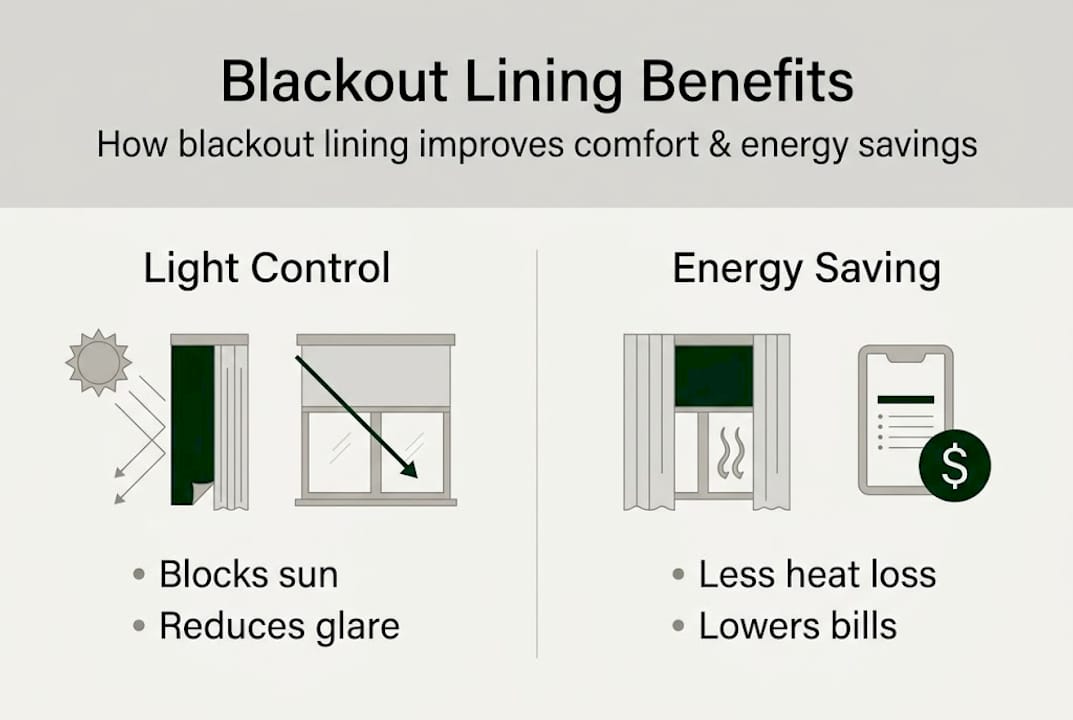
Beyond light control, blackout lining contributes meaningfully to reducing energy loss through windows, which is where the real long-term value appears. The U.S. Department of Energy reports that window coverings reduce heat gain by up to 33 to 45% in summer and heat loss by 10 to 40% in winter, depending on the treatment type and installation quality.
Here is how blackout lining compares to other common options:
Lining type | Light control | Insulation | Privacy level |
Blackout lining | Near-total (95-99%) | High | Excellent |
Standard lining | Moderate | Low to moderate | Good |
Light-filtering lining | Low to moderate | Low | Moderate |
Sheer/no lining | Minimal | Very low | Poor |
The key features that set blackout lining apart include:
Opacity: Blocks nearly all incoming light, including direct sunlight
Thermal performance: Adds an insulating barrier between glass and interior
Privacy: Prevents outside visibility even with interior lighting on
Fabric protection: Shields decorative drapery from UV fading
For homeowners investing in quality drapery fabrics, blackout lining also serves as a practical protective layer, extending the life of the outer material.
Key benefits: Light control, privacy, and sleep improvement
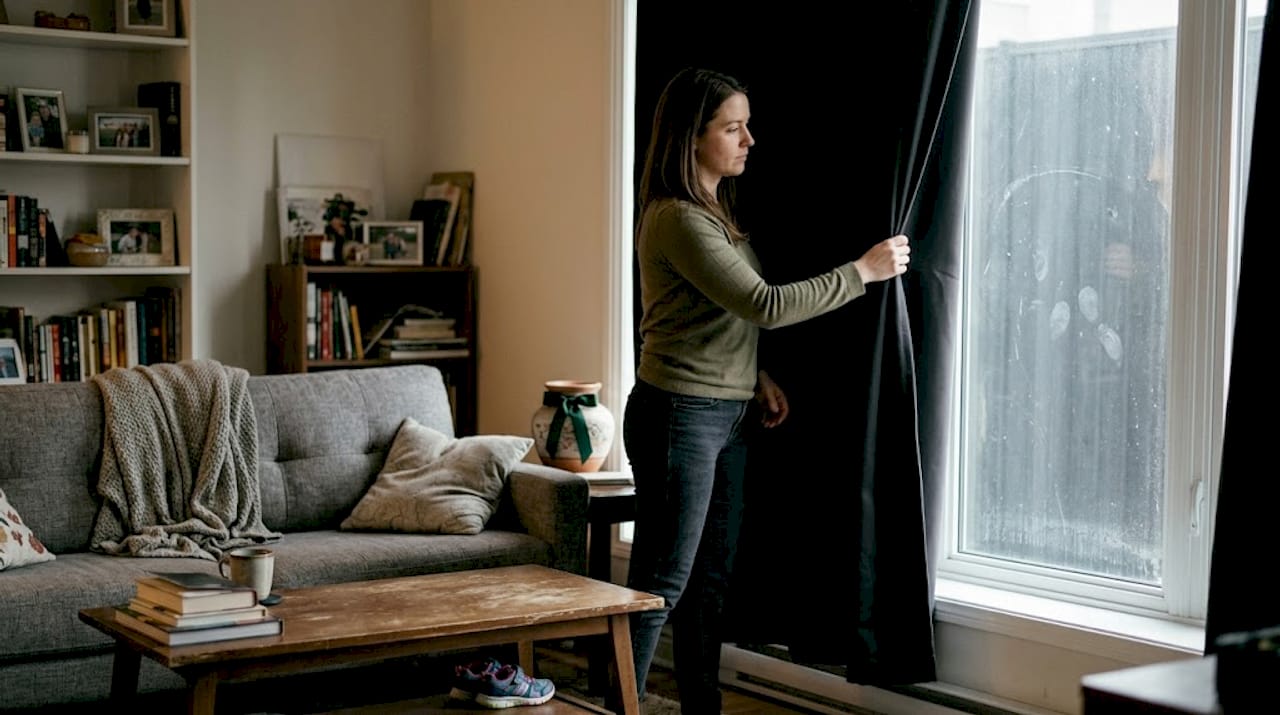
Blackout lining’s most immediate impact is on the quality of light inside a room. When installed correctly, it blocks 95 to 99% of incoming light, making it the preferred solution for bedrooms, nurseries, home theaters, and any space where ambient light disrupts function or comfort.
For shift workers, parents of young children, or anyone sensitive to early morning light, the difference between a lined and unlined curtain is genuinely significant. Research consistently links light exposure during sleep hours to disrupted circadian rhythms, which affect sleep quality, mood, and energy levels. Controlling that light source with a reliable window treatment is one of the most straightforward interventions available.
Windows account for 30% of heating energy loss in a typical home, making effective window treatments one of the most impactful upgrades for comfort and energy efficiency.
Blackout lining also eliminates the glare that affects screen visibility in home offices and media rooms. This is a practical concern that many homeowners overlook until they are repositioning furniture or pulling shades mid-afternoon to see a computer screen clearly.
Privacy is another strong advantage, particularly in urban and suburban homes where windows face neighboring properties or street-level foot traffic. Standard curtains in lighter fabrics can become semi-transparent when interior lights are on at night. Blackout lining eliminates that problem entirely.
Pro Tip: Layer blackout lining behind a decorative drapery fabric in linen, velvet, or a refined jacquard to achieve room-darkening function without sacrificing the visual character of your window treatment. Explore expert window treatment tips for guidance on pairing fabrics by room type.
Common use cases where blackout lining delivers the most value:
Bedrooms: Primary sleep spaces benefit most from total light control
Nurseries: Consistent darkness supports infant and toddler sleep schedules
Home theaters and media rooms: Eliminates screen glare and improves viewing contrast
Home offices: Reduces afternoon glare on monitors and video call backgrounds
Guest rooms: Accommodates guests with varying sleep schedules and sensitivities
Energy efficiency: How blackout lining saves on heating and cooling
Windows are one of the weakest points in a home’s thermal envelope. Without effective window treatments, heat flows freely in both directions, out in winter and in during summer. The financial impact shows up on utility bills year-round.

Blackout lining addresses this by adding a physical barrier that slows heat transfer. The U.S. Department of Energy notes that medium-colored draperies with white-plastic backings reduce solar heat gain by 33%, and high-performance treatments push that figure higher. For context, summer heat gain reductions of up to 45% are achievable with well-fitted, properly installed blackout window treatments.
Here is how blackout lining stacks up against common alternatives for energy performance:
Treatment type | Summer heat gain reduction | Winter heat loss reduction | Aesthetic flexibility |
Blackout lining | Up to 45% | 10 to 40% | High |
Cellular shades | Moderate | Up to 40% | Moderate |
Standard curtains | Low to moderate | Low | High |
No treatment | None | None | N/A |
To maximize energy performance when using blackout lining, follow these steps:
Fit the curtain to the window precisely. Gaps at the sides or bottom allow heat to bypass the lining entirely. Floor-to-ceiling panels with generous side coverage perform best.
Mount the rod as close to the ceiling as practical. This minimizes the gap at the top and creates a more effective thermal seal.
Choose a lining with an acrylic or foam backing. These materials offer better insulation than plain woven linings.
Close curtains during peak sun hours in summer. In winter, open south-facing curtains during daylight to allow passive solar gain, then close them at dusk.
For homes in climates with extreme temperature swings, you may also want to upgrade windows for efficiency alongside adding blackout lining for compounded results. Reviewing the available window treatment types by room and climate will help you select the right combination for your specific situation. Cellular shades edge ahead on insulation alone in some cases, but blackout lining offers aesthetic versatility that shades cannot match and is worth the additional consideration.
Design versatility: Aesthetics, fabric pairing, and practical limits
One of the most persistent misconceptions about blackout lining is that it forces a heavy, institutional look. That is simply not accurate. Blackout lining sits behind the decorative fabric, invisible from the interior of the room, meaning your choice of face fabric drives the visual result entirely.
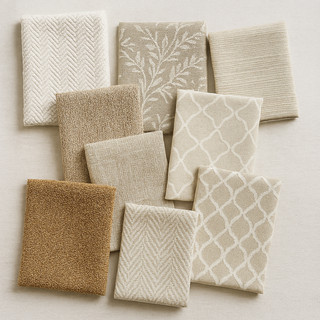
This gives you significant design freedom. A lightweight cotton voile face fabric with blackout lining behind it will look airy and relaxed from inside the room while still blocking light effectively. A structured jacquard or embroidered satin paired with blackout lining creates a formal, layered treatment suited to traditional or transitional interiors.
Popular fabric pairings with blackout lining include:
Velvet: Adds warmth and texture, already somewhat light-blocking on its own
Linen blends: Casual and relaxed in appearance, with blackout lining providing the functional layer
Cotton canvas: Durable and versatile, works well in modern and transitional spaces
Jacquard and embroidered fabrics: Decorative weaves benefit from the structural support lining provides
Synthetic drapery fabrics: Cost-effective and easy to maintain, pair cleanly with standard blackout lining weights
Pro Tip: For delicate or lightweight face fabrics, select a thinner blackout lining rather than the heaviest available option. This preserves the drape of the outer fabric while still providing effective light control. Custom sizing ensures neither the lining nor the face fabric pulls unevenly at the header or hem.
That said, blackout lining does have practical limits. It adds weight and bulk to any panel, which can be a concern for cafe-style curtains, short valances, or very lightweight sheers. In those applications, a light-filtering lining or window treatment trends that emphasize layering may offer a better outcome. According to the Department of Energy, heavy linings add bulk and cost and may not suit short or sheer curtains, which is a fair caution worth considering during the planning stage.
When blackout lining isn’t the best choice: Alternatives and decision-making tips
Blackout lining is a strong solution, but it is not the right answer for every window or every room. Knowing when to choose differently is just as valuable as knowing when to use it.
In spaces designed to feel open and bright, such as sunrooms, breakfast nooks, or rooms with limited natural light, blackout lining works against the room’s purpose. Sheer or light-filtering treatments preserve the connection to the outdoors while still offering some UV protection and privacy during daylight hours.
For rooms where insulation is the primary goal but total darkness is not required, cellular shades frequently outperform blackout lining. The U.S. Department of Energy notes that cellular shades reduce heat loss by up to 40%, which is comparable to or better than many blackout lining configurations in certain climates. If insulation is your priority and aesthetics are secondary, cellular shades deserve serious consideration.
Choosing the right window treatment means balancing insulation, privacy, and design as a whole. Prioritizing one factor alone often creates a solution that underperforms in the others.
Here is a straightforward process for deciding on the right window lining:
Define the room’s primary function. A bedroom calls for different priorities than a kitchen or living room.
Identify your top requirement. Is it light control, insulation, privacy, or aesthetics? Rank them honestly.
Assess the window’s size and position. North-facing windows need different treatments than south or west-facing ones.
Consider the curtain fabric first. The face fabric’s weight and drape will influence which lining is compatible without adding excessive bulk.
For room-by-room window advice tailored to different living spaces, a structured guide can help you move from general principles to specific decisions with confidence.
Our take: Blackout lining, misunderstood but transformative
After working through the practical details, it is worth addressing a bias that surfaces regularly in interior design conversations. Blackout lining is often categorized mentally as a solution for light-sensitive sleepers and home theater enthusiasts, and nothing more. That narrow view leads many homeowners to skip it in spaces where it would genuinely improve daily life.
The reality is that curtain lining insights consistently point to energy performance and design support as equally important outcomes, not just light blocking. A well-chosen blackout lining extends the life of expensive drapery fabric, reduces strain on heating and cooling systems, and elevates the overall quality of a room without being visible to anyone in it.
The caution is this: blackout lining applied without considering the fabric, the room’s purpose, or the installation quality can add unwanted bulk and underdeliver on every front. Customization and professional guidance make the difference between a treatment that performs quietly and one that creates more problems than it solves. Approach it room by room, and the results will speak for themselves.
Expert window solutions for every space
Finding the right combination of drapery fabric and lining is easier with access to quality materials and knowledgeable support. Beautiful Windows Elgin offers an extensive selection of designer fabrics suited to every window treatment application, from structured blackout-lined draperies to lighter layered options for flexible light control.

Whether you are sourcing fabric for a custom drapery project or seeking guidance on the right lining for a specific room, Beautiful Windows Elgin provides both the materials and the expertise to make informed decisions. For specialized applications, explore durable options like waterproof canvas for outdoor-adjacent treatments, or request a design consultation to discuss your project in detail. Quality window treatments begin with quality materials and the right guidance.
Frequently asked questions
Does blackout lining make a room warmer in summer?
Blackout lining actually reduces summer heat gain by up to 45%, helping rooms stay cooler and reducing the workload on air conditioning systems.
Is blackout lining suitable for all types of curtains?
Blackout lining works best with heavier drapery fabrics. The Department of Energy notes that heavy linings may not suit short or sheer curtains due to added bulk and weight.
How does blackout lining compare with cellular shades for insulation?
Cellular shades can reduce heat loss by up to 40%, which sometimes equals or exceeds blackout lining’s insulation performance, making them a strong alternative when insulation is the primary goal.
Does blackout lining help with noise reduction?
Blackout lining can provide a modest reduction in outside noise due to its density, but its primary strengths remain light blocking and insulation rather than acoustic performance.
Recommended

Comments