


How to layer window treatments for style and function
- Woven Dwelling
- 5 hours ago
- 9 min read
TL;DR:
Layering window treatments enhances functionality, style, and energy efficiency with multiple purpose-specific layers.
A well-designed three-layer system includes an inner functional layer, middle sheer, and outer decorative drape.
Proper spacing, hardware strength, and purposeful fabric choices are essential to avoid clutter and achieve polished results.
Choosing window treatments that look polished, protect your privacy, and give you full control over natural light is a challenge most homeowners know well. A single curtain panel rarely accomplishes everything a room needs. Layering window treatments solves that problem by combining multiple elements, each with a specific role, into one cohesive design. When done thoughtfully, layered windows can reduce energy loss, soften harsh light, and add genuine visual depth to any room. This guide walks through the benefits, materials, step-by-step installation, and common mistakes to help you get it right the first time.
Table of Contents
Key Takeaways
Point | Details |
Three-layer system | Use functional, sheer, and decorative layers for best results. |
Intentional design | Each layer should have a clear purpose to avoid clutter. |
Choose suitable materials | Select fabrics and hardware that match your style and needs. |
Step-by-step process | Follow a logical order when selecting, measuring, and installing layers. |
Avoid common mistakes | Space layers well and coordinate colors for a polished look. |
Why layer window treatments?
Layering window treatments is more than an aesthetic choice. Each layer serves a distinct purpose, and together they create a system that handles light control, privacy, insulation, and room character simultaneously. Most single-treatment windows force you to choose between blocking light and losing your view, or enjoying the scenery while sacrificing privacy. Layering removes that trade-off.
The functional benefits are well established. Insulating layers reduce heat transfer through glass, which is especially valuable during cold winters or hot summers. A sheer layer softens incoming light without blocking it entirely, protecting furniture from UV fading while maintaining a bright, airy atmosphere. Heavy outer drapes, when closed, can noticeably reduce outside noise in street-facing rooms.
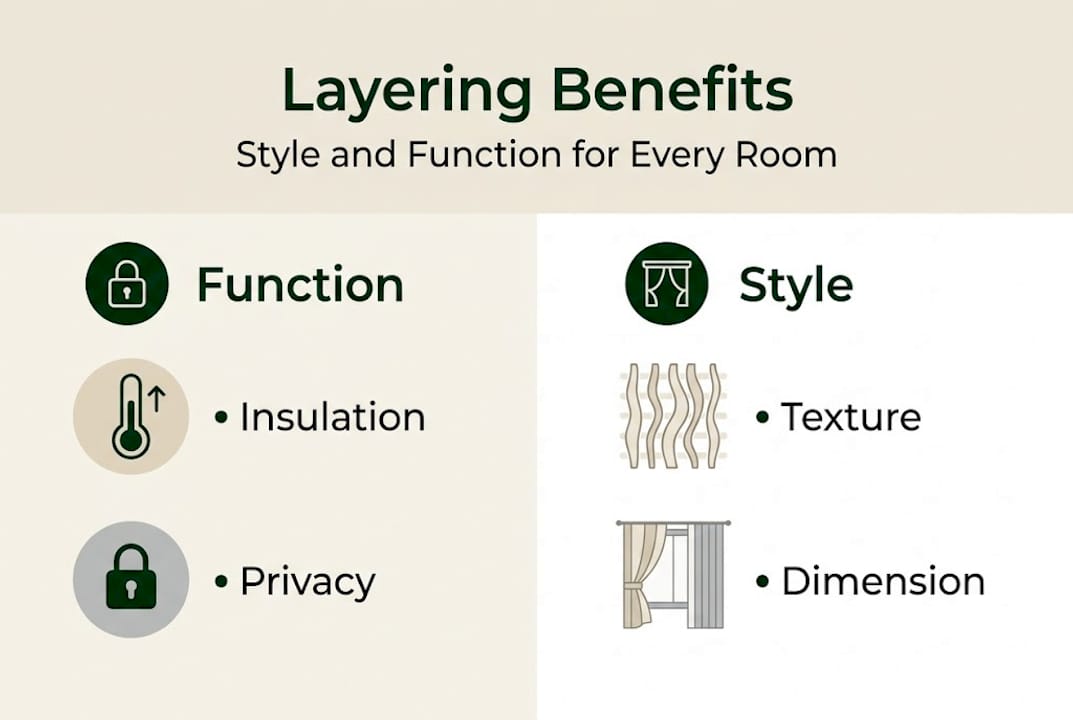
From a design standpoint, layered windows add dimension and texture that a single panel simply cannot achieve. A room with only roller shades can feel flat and utilitarian. Add a linen sheer and a structured drapery panel in a complementary fabric, and the same window becomes a refined focal point.
That said, you can get it wrong. As noted by design professionals, layered treatments risk clutter if each layer lacks a clear purpose or proper spacing. Stacking layers without intention results in windows that look heavy, busy, and hard to operate. The goal is purposeful design, not decoration for its own sake.
Here are the core benefits layering provides when done correctly:
Privacy control: Adjust individual layers to manage sightlines at different times of day.
Light flexibility: Sheers filter without blocking; blackout layers eliminate light entirely when needed.
Energy efficiency: Insulating drapes and cellular shades trap air and reduce heat loss. Explore energy-saving window treatments for specific material options.
Acoustic buffering: Heavier outer layers absorb sound, which is useful in open-plan homes.
Visual sophistication: Varied textures and layers create a finished, designed look.
“Intentional design is the difference between layered windows that look curated and those that look crowded. Every layer should earn its place.” This principle guides every well-executed window treatment project.
For a broader look at how to approach layering like a pro, it helps to first understand what each layer contributes before choosing materials.
What you need: Key components and materials
After understanding the value of layering, it’s time to gather everything you need. Most well-layered window treatments follow a 3-layer system: an inner functional layer, a middle diffusion layer, and an outer decorative or insulating layer. Each layer has distinct material requirements and serves a unique role in the overall composition.

Layer | Role | Common materials |
Inner (functional) | Light blocking, privacy, insulation | Roller shades, blinds, cellular shades, shutters |
Middle (sheer) | Light diffusion, softness, transition | Voile, linen sheer, silk organza, cotton muslin |
Outer (decorative) | Visual impact, insulation, framing | Jacquard drapes, velvet panels, linen curtains, cotton prints |
Beyond the layers themselves, you’ll need the right hardware and tools to install them properly. A few essential items:
Double or triple curtain rods: These allow multiple layers to hang from a single mounting point without stacking brackets awkwardly.
Sturdy wall brackets: Each layer adds weight; undersized hardware is a common cause of sagging rods.
Measuring tape and level: Accurate measurement prevents gaps, uneven hems, and asymmetry.
Curtain rings or hooks: These affect how panels move and hang, and should match the rod finish.
Holdbacks or tiebacks: Useful for outer decorative layers when you want to frame the window during the day.
Material selection should also reflect your climate and room use. A bedroom in a warm, sunny climate benefits from blackout cellular shades as the inner layer, paired with a light cotton sheer. A living room in a cooler region may prioritize a heavier outer panel in a durable jacquard or lined cotton weave. For guidance on choosing window treatment fabrics, considering fiber content, weave density, and lining options will help narrow the right choices for your specific space.
Understanding the range of available window treatment types also helps you make informed decisions about which inner layer best suits your window size and light needs.
Pro Tip: Use matching rod finishes across all layers in a room for visual cohesion, then vary fabric textures to add sophistication without creating a mismatched look.
How to layer window treatments step by step
Once your materials are ready, here’s exactly how to layer them for maximum effect. Following the correct order of installation prevents fit problems and makes each layer easier to operate.
Measure your window carefully. Note the width and height of the window frame, the wall space above the frame, and the distance to the floor. For drapes, adding 4 to 6 inches above the frame visually raises the ceiling.
Install the inner functional layer first. Mount blinds, roller shades, or shutters inside the window frame or just outside it, depending on the window depth. This layer sits closest to the glass.
Add the middle sheer layer. Mount a single rod just outside the frame or on the wall above. Sheer panels should hang softly without excessive bunching. Choose a fabric weight that filters without feeling stiff.
Hang the outer decorative layer last. Use a rod positioned above the sheer rod or a double rod system that keeps both layers accessible. Outer drapes should just graze the floor or break slightly for an elegant finish.
Test each layer independently. Confirm that all layers open, close, and adjust smoothly without catching on one another.
As design professionals consistently note, a well-structured 3-layer approach using inner functional elements, middle sheers, and outer drapes creates the most versatile and visually balanced result.
When choosing your inner functional layer, the comparison below can help:
Treatment type | Light control | Privacy | Insulation | Best for |
Roller shades | High | High | Low to moderate | Clean, minimal aesthetics |
Cellular shades | High | High | High | Energy-conscious rooms |
Wood blinds | Adjustable | Adjustable | Low | Traditional or rustic styles |
Plantation shutters | Adjustable | Adjustable | Moderate | Classic or coastal rooms |
Stay current with the latest window treatment trends to ensure your inner layer choice aligns with both current design directions and your home’s style. You can also review the detailed layering process for more installation specifics.
Pro Tip: Always install layers from the inside out. Starting with the innermost treatment and working outward ensures each layer fits correctly and doesn’t interfere with the ones behind it.
Common mistakes and how to avoid them
With your layers in place, make sure you avoid these common pitfalls. Even well-selected materials can create a disappointing result if the installation or design choices miss key details.
The most frequent issue is over-layering. Adding four or five treatments to a single window rarely improves the result. As design guidance consistently confirms, layers without purpose create visual clutter rather than elegance. Three layers is the functional maximum for most standard windows.
“The window should feel dressed, not buried. If you can’t operate each layer independently without frustration, you’ve added too much.”
Here are the most common mistakes and their solutions:
Over-layering: Limit treatments to two or three layers. More than that usually diminishes both function and appearance. For small windows especially, two layers are almost always sufficient.
Mismatched colors without intention: Colors don’t need to match exactly, but they must coordinate. A neutral base layer lets you introduce a statement fabric in the outer drape without clashing.
Ignoring hardware weight limits: Decorative rods are often designed for a single curtain panel. Check the weight rating before hanging multiple layers from one rod. Undersized hardware bends or pulls from the wall over time.
Poor spacing between layers: Each treatment needs room to operate. Sheers that press against blinds collect dust and become difficult to open. Keep at least one inch of clearance between layers.
Skipping lining on outer drapes: Unlined outer panels lose their structure over time and provide less insulation value. A quality interlining or blackout lining extends fabric life and improves the drape’s performance.
Neglecting proportion: Drapes that are too narrow for the window look sparse. Panels should be at least 1.5 times the window width for a full, finished appearance.
For additional guidance on balancing function and decoration in your window treatment selections, reviewing current design approaches can help you make purposeful choices from the start.
Expert perspective: What most people get wrong about layering window treatments
Here is where conventional wisdom sometimes leads homeowners astray. Many people approach layering as an additive process, assuming that more layers automatically mean more style. That assumption produces rooms where windows feel heavy and imposing rather than refined.
Experienced designers focus as much on what is not there as on what is. Negative space between treatments, the gap between a sheer hem and the floor, the breathing room between a shade and an outer drape — these details define whether a layered window looks intentional or overworked.
The three-layer rule is a useful starting point, not a rigid requirement. A bathroom window may need only a functional shade and a simple valance. A dramatic living room bay window might benefit from a fourth architectural element like a cornice board. Rooms with large, well-proportioned windows can support more visual weight. Smaller rooms with modest windows often look their best with restrained, well-spaced treatments.
Working with diverse home styles across the years confirms one consistent pattern: the homeowners most satisfied with their windows chose fabric quality and thoughtful spacing over quantity. Investing in a beautiful fabric selection for homeowners at each layer will always outperform adding an extra layer of lesser material.
Ready to transform your windows? Shop fabrics and get expert help
Putting layered window treatments together becomes far more straightforward when quality fabrics and knowledgeable guidance are within reach. Beautiful Windows Elgin offers an extensive selection of designer fabrics suited to every layer — from refined sheers and embroidered cotton panels to durable jacquard satin outer drapes.

Browse coordinating fabrics for your window treatment project, request samples, or book a design consultation to get personalized recommendations for your specific rooms. Whether you’re sourcing materials for a full home refresh or a single statement window, shop window treatment fabrics to find the right combination of function and style. Visit Beautiful Windows Elgin to explore the full collection and connect with professionals who understand quality fabric sourcing inside out.
Frequently asked questions
What is the best order for layering window treatments?
Start with the most functional layer (blinds or shades) closest to the glass, add a soft sheer for light diffusion in the middle, then finish with decorative drapes on the outermost rod. This 3-layer sequence ensures every treatment remains easy to operate and serves a clear purpose.
Can you layer different colors and patterns?
Yes, and it can look striking when approached carefully. Coordinate similar tones or anchor the design with a neutral inner and middle layer, then introduce a purposeful pattern through your outer decorative drape to avoid visual clutter.
How do I choose the right rod or hardware?
Select sturdy rods rated for the combined weight of your fabrics, match finishes across all layers for a cohesive look, and confirm that each rod can be operated smoothly and independently from the others.
Is it possible to layer window treatments on small windows?
Absolutely. Limit yourself to two layers — a functional shade plus a light sheer or a simple outer panel — to prevent crowding and keep the window feeling open and proportionate to the room.
Recommended

Comments