


Curtain interlining benefits every home needs in 2026
- Woven Dwelling
- 2 days ago
- 8 min read
TL;DR:
Curtain interlining enhances insulation, fullness, and a polished, high-end appearance.
It provides benefits like thermal control, light blocking, sound dampening, and fabric protection.
Choosing the right interlining material depends on your comfort with sewing and desired room functionality.
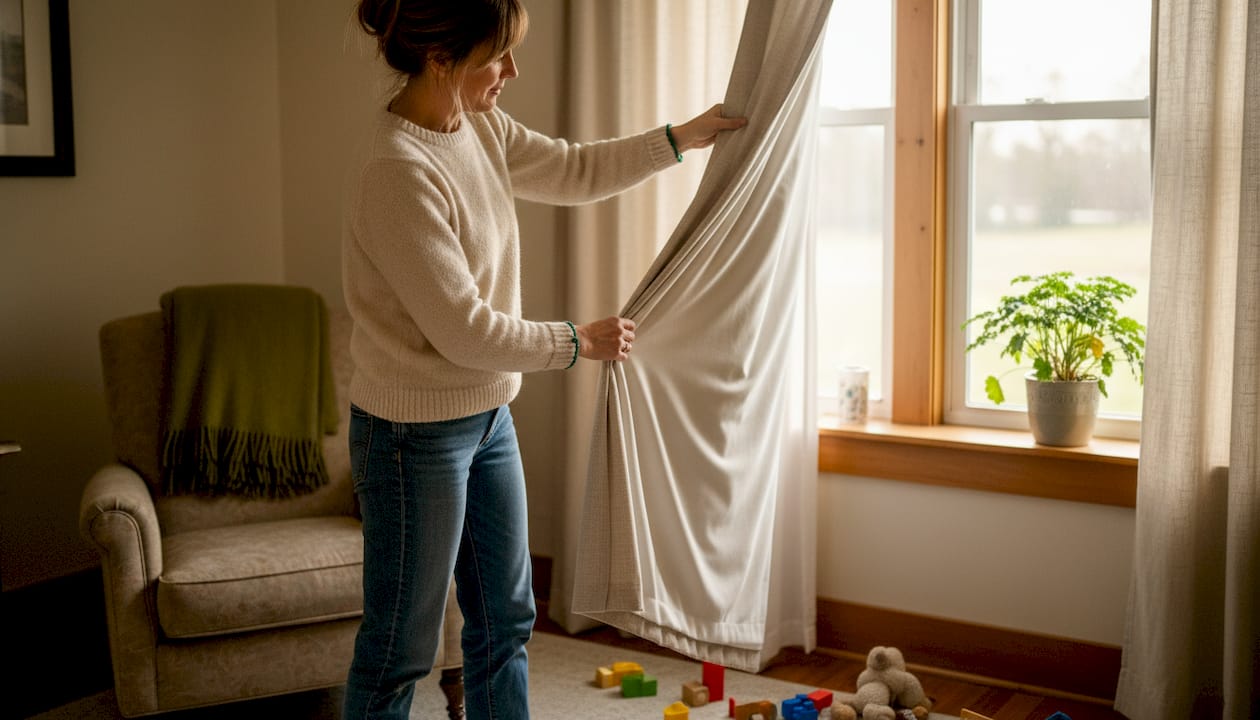
Most homeowners skip curtain interlining without a second thought, assuming it’s an unnecessary expense or a complicated step reserved for professional workrooms. That’s a costly mistake. Interlining is the hidden layer between your face fabric and lining that quietly transforms how a room looks, feels, and performs. It adds structure, warmth, and a polished finish that even the most expensive fabric alone cannot achieve. This guide breaks down everything you need to know about curtain interlining, from choosing the right material to installing and caring for it yourself, so you can make a genuinely informed decision for your home.
Table of Contents
Key Takeaways
Point | Details |
Extra insulation | Curtain interlining helps keep your home warmer and can cut down on heating costs. |
Luxury appearance | Interlined curtains look fuller and more elegant, improving any room’s décor. |
Sound and light control | Interlining boosts noise reduction and enhances light blocking for added comfort. |
DIY choices matter | Choosing the right material makes the process simpler and the results long-lasting. |
What is curtain interlining and how does it work?
Curtain interlining is a soft, padded layer inserted between the decorative face fabric and the standard lining of a curtain. Unlike a regular lining, which primarily protects the fabric and adds some opacity, interlining gives the curtain body, weight, and depth. It sits invisibly in the middle of the curtain sandwich, doing most of the heavy lifting without being seen.
Understanding drapery lining explained is a helpful starting point, but interlining takes that foundation a step further by adding a third layer that changes the entire character of the window treatment.
The three most common interlining materials are:
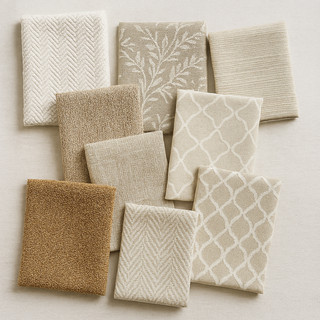
Bump: A thick, fluffy fabric with a flannel-like texture. It offers maximum insulation and fullness but tends to shed during cutting, which can make it messier to work with.
Domette: A lighter, more loosely woven option that is easier to handle than bump. It still provides noticeable body and some insulation, making it a popular choice for DIYers.
Cotton interlining: Thin and stable, cotton works well in lighter window treatments and is often the most accessible choice for beginners. Pre-shrinking is essential before sewing.
Material | Weight | Insulation | Ease of DIY | Best for |
Bump | Heavy | High | Moderate | Luxury drapes, cold rooms |
Domette | Medium | Moderate | Easy | Everyday curtains, beginners |
Cotton | Light | Low to moderate | Very easy | Lightweight treatments |
For DIY projects, the basic process involves sandwiching the interlining between the face fabric and lining, then hand-sewing or machine stitching loosely to avoid bulk. Pre-shrinking cotton types before cutting prevents puckering later. This approach works equally well for drafty windows and for anyone seeking a more refined, luxury look.
The result is a curtain that hangs with quiet authority. It doesn’t billow or collapse awkwardly. It drapes cleanly from rod to floor with the kind of structure you typically see in professionally finished interiors.
Top benefits of using curtain interlining
Once you understand what interlining is, it becomes clear why so many decorators and homeowners consider it essential. Here are the main benefits you’ll enjoy:
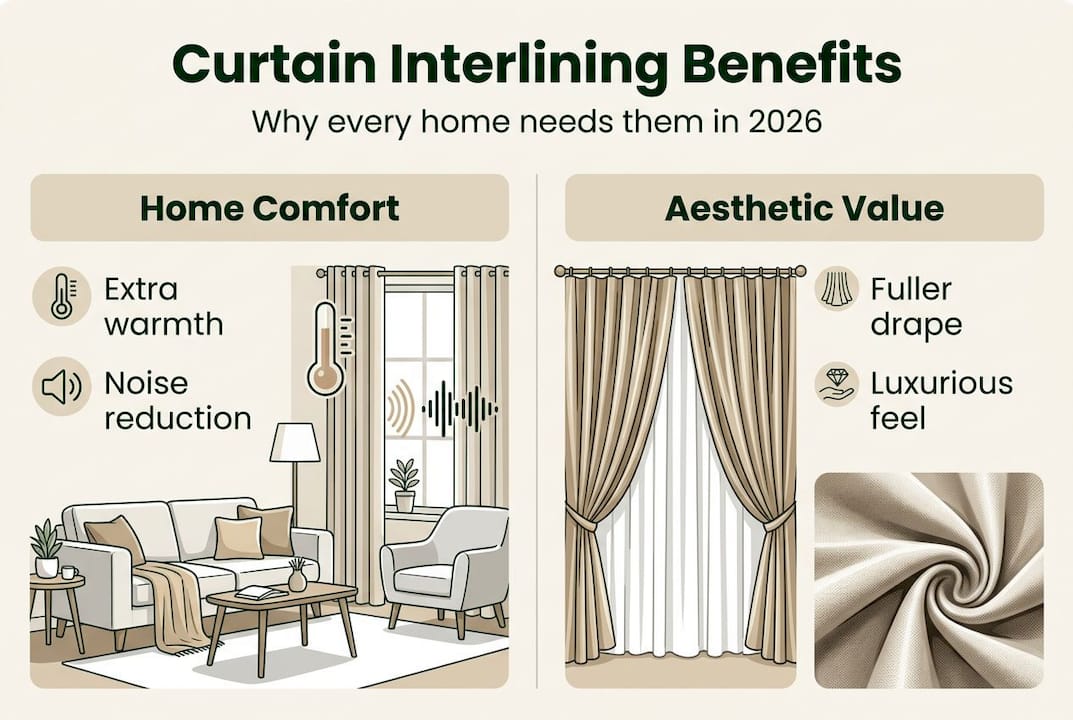
Thermal insulation: Interlined curtains trap air between layers, creating a barrier that helps reduce heat loss through windows. This is particularly valuable for older homes with single-glazed windows.
Light control: The added density of interlining significantly reduces light bleed, making it ideal for bedrooms, nurseries, and media rooms where deeper darkness matters.
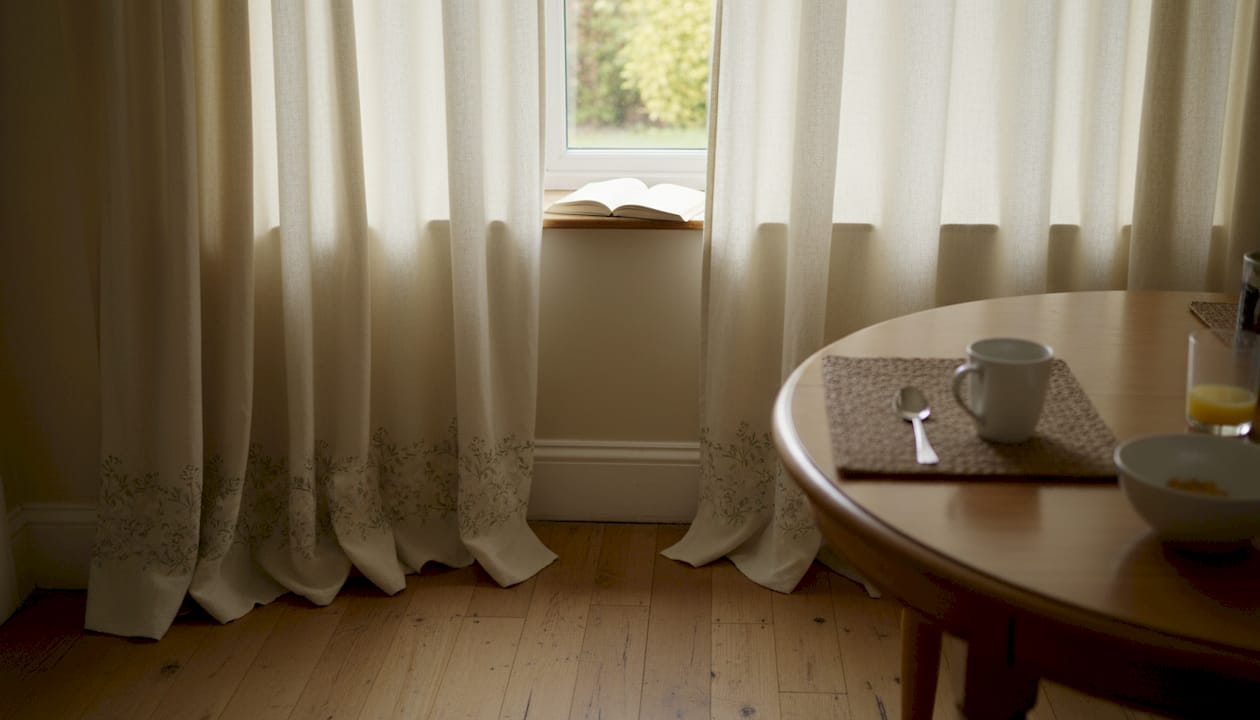
Fuller drape and luxury finish: Interlining gives curtains a sculptural, gathered look that reads as high-end even when the face fabric is relatively simple.
Sound dampening: The layered mass helps absorb ambient noise, adding a quiet privacy to rooms that face busy streets.
Extended fabric life: By cushioning the face fabric from sun exposure and physical wear, interlining can meaningfully extend the lifespan of your curtains.
“A well-interlined curtain is one of the most cost-effective upgrades in a room. It changes the weight, the sound, and the warmth in ways that are immediately noticeable.”
As noted in guidance on how to sew curtains, interlining is especially recommended for drafty windows or when a luxury look is the goal. Both purposes are achievable with the right material choice.
Pro Tip: If your room runs cold in winter and warm in summer, interlining your curtains is one of the simplest and most affordable ways to stabilize the temperature without touching your HVAC system.
For a broader view of how these qualities pay off over time, the benefits of custom curtains are well worth understanding before you shop. Pairing interlining with quality fabric choices can also help you cut heat loss with lining more effectively than lining alone.
Curtain interlining options: bump, domette, cotton, and more
With so many advantages, you might wonder what type of curtain interlining is right for you. Here’s how each option compares:
Feature | Bump | Domette | Cotton |
Insulation level | High | Moderate | Low to moderate |
DIY suitability | Moderate | High | Very high |
Cost | Higher | Mid-range | Lower |
Shedding during cutting | Yes | Minimal | No |
Best use case | Formal rooms, cold homes | Everyday use | Light treatments |
As a general rule, bump is hardest to work with due to shedding, while domette is considerably easier to handle for those newer to sewing curtains. That said, bump delivers a noticeably more structured and weighty result when installed correctly.
Here is a step-by-step approach to choosing the right interlining:
Identify your primary goal. Are you after insulation, a luxury look, or both? If insulation is the priority, bump is the strongest performer. If appearance matters most, domette offers a refined finish with less mess.
Assess your sewing confidence. Beginners do well with domette or cotton. Experienced sewers can tackle bump without issue once they account for the shedding.
Check your fabric weight. Heavier face fabrics pair naturally with bump or domette. Lighter fabrics, such as voiles or sheers, are better suited to thin cotton interlining.
Pre-shrink if using cotton. Wash and dry your cotton interlining before cutting it to size. Skipping this step can cause the finished curtain to pucker after cleaning.
Test a small swatch. Before committing to a full curtain project, stitch a small test panel to confirm the layers work well together and the overall weight feels right.
For specific fabric pairings, the cotton curtain guide offers practical guidance on how cotton base fabrics behave with different interlining choices. A broader curtain fabric selection resource can also help you match your face fabric to the right interlining weight.
How to use and care for interlined curtains
After picking the right interlining, the next step is installation and maintenance. Here’s how you can get professional results at home and keep your curtains beautiful for years:
Installation tips:
Cut the interlining slightly smaller than the face fabric on all sides. This prevents it from rolling out at the edges and creating visible bulk at the seams.
Position the interlining on the wrong side of the face fabric, then fold the face fabric edges over it before attaching the lining on top.
Hand-sew or machine stitch loosely to avoid pulling the layers tight. Tight stitching causes the curtain to pucker and lose its smooth drape. Pre-shrink cotton interlining types before cutting.
Use a catch stitch or lock stitch along the length of the curtain to tack the interlining to the face fabric at regular intervals. This keeps the layers from shifting over time.
Pro Tip: When tacking the interlining to the face fabric, work in vertical rows spaced about 12 inches apart. This keeps everything aligned without restricting the natural movement of the curtain.
Care and maintenance:
Most interlined curtains should not be machine washed. The multiple layers and varied fiber content can shrink or distort at different rates.
Dry cleaning is the safest approach for bump and domette interlined panels. For cotton interlining with washable face fabrics, gentle hand washing may be suitable.
Vacuum curtains regularly with a soft brush attachment to remove dust before it embeds in the layers.
For detailed guidance, reviewing how to clean your curtains safely will help you avoid common cleaning errors.
Storage and seasonal care:
Store interlined curtains loosely folded or rolled, never compressed, to prevent permanent creasing in the interlining layer.
Keep them in breathable fabric bags rather than plastic, which can trap moisture and cause mildew.
Following structured drapery care tips for seasonal rotation will help preserve the shape and integrity of the interlining over years of use.
The overlooked power of curtain interlining: Our take
In our experience, interlining is the one upgrade that homeowners most consistently wish they had added sooner. Most people focus entirely on the face fabric, spending significant time and money selecting the perfect color, pattern, or texture, and then hang it with a basic lining and wonder why the result looks flat.
The honest truth is that interlining is what separates a curtain that fills space from one that defines a room. It changes the acoustic quality, the light quality, and the visual weight of the entire wall. Those effects are subtle individually, but together they shift how a space feels in a way that’s hard to explain until you’ve experienced it firsthand.
For those exploring custom curtains for southeastern homes, the climate-specific benefits of interlining, especially for managing heat and humidity, are an added reason to take this layer seriously. We always recommend at least a sample test before dismissing it as unnecessary.
Ready to transform your windows?
If interlining has you thinking about upgrading your window treatments, the right materials and expert guidance are closer than you might expect.

At Beautiful Window Elgin, you’ll find a curated selection of quality fabrics suited to both DIY projects and professional drapery workrooms. Whether you’re sourcing your first interlining material or building out a full custom treatment, the shop offers reliable options alongside personalized design support. For projects that extend beyond drapery, durable materials like waterproof canvas fabric are also available for outdoor and specialty applications. Browse the full collection and take the first confident step toward windows that truly elevate your home.
Frequently asked questions
What is the main purpose of curtain interlining?
Curtain interlining adds insulation and structure, helping keep rooms warmer while giving curtains a fuller, more luxurious appearance that a single-layer treatment cannot match.
Is curtain interlining necessary for all curtains?
It is not required for every window, but it delivers real advantages in drafty windows or luxury applications where extra warmth, fullness, or a polished finish is the goal.
What’s the easiest interlining material for DIY beginners?
Domette is the most manageable starting point, since bump’s shedding makes it harder to cut and handle cleanly, especially for those new to sewing curtains.
How do you care for interlined curtains?
Follow fabric-specific care labels, avoid machine washing layered panels, and vacuum regularly. Stitching loosely and pre-shrinking cotton interlining during construction also prevents long-term distortion after cleaning.
Recommended

Comments